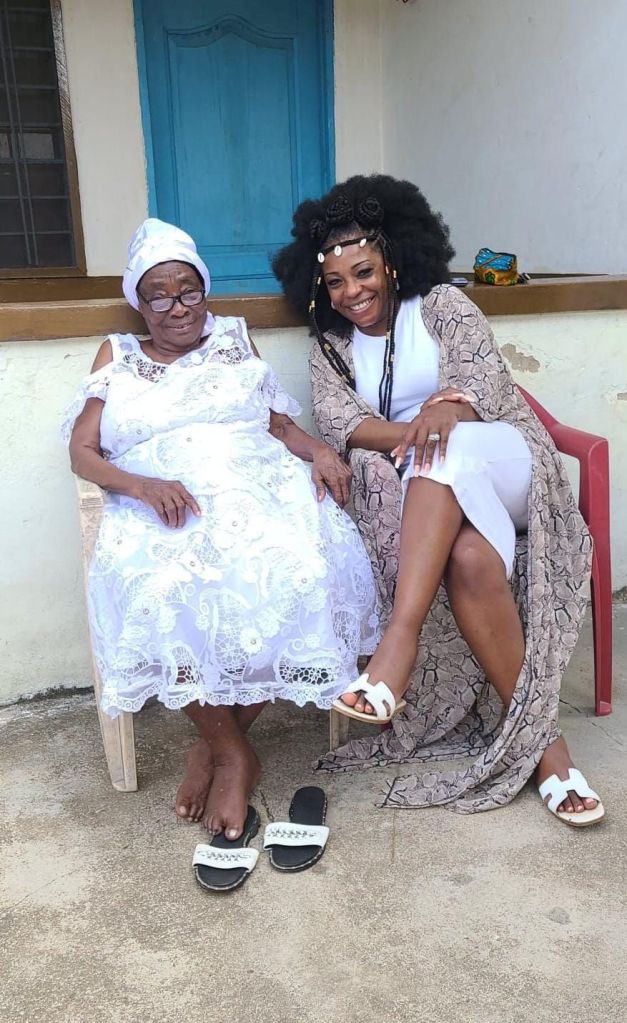
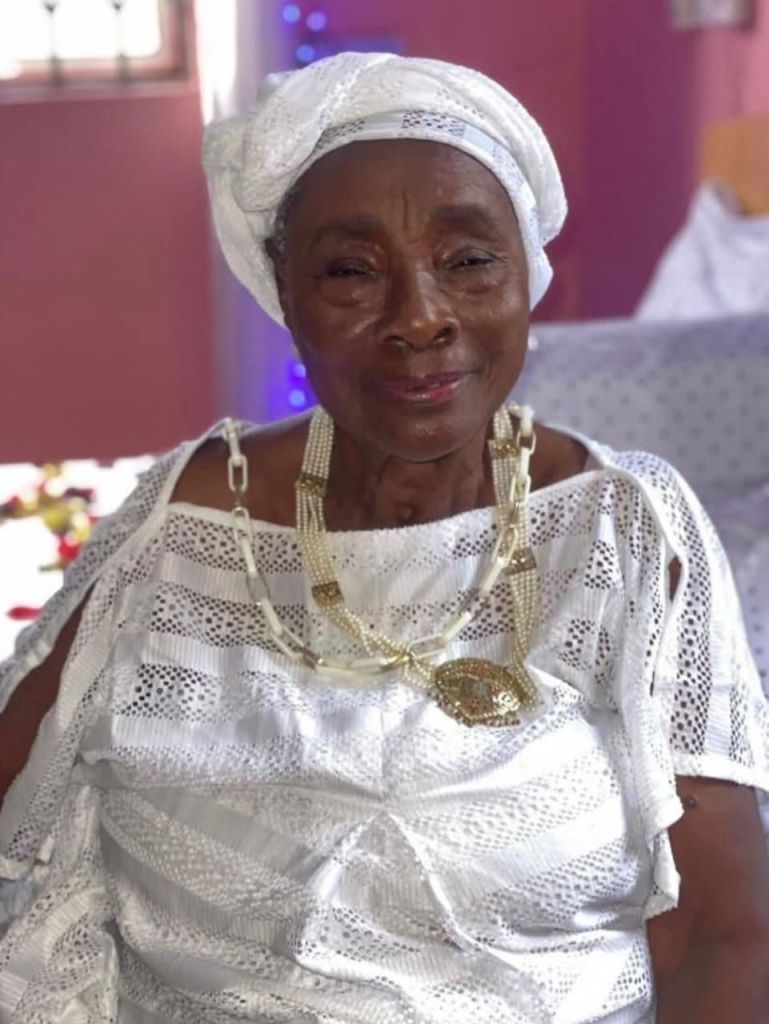
Beneath the quiet of the heavens, my grandmother rests, The towering odum has fallen—its majesty still lingers. Deep roots entwined with earth’s history, Her branches stretch across realms, offering solace in the unknown.
My grandmother lies down to sleep, A celestial being has returned home. Her life was a hymn of peace and harmony, Her gentle voice a psalm of grace, Her heart, a vessel of unblemished truth.
My grandmother lies down to sleep, A pillar of unwavering strength and dignity. Her movements carried the rhythm of elegance, Her presence, a testament to resilience. Now, an angel she becomes, ascending to the eternal.
My grandmother lies down to sleep, The candle flickers—a tender rebellion against the night— Each flutter a memory, a life well-lived. And when it surrenders to the dark, It leaves behind a glow we hold in our hearts.
My grandmother lies down to sleep, Her face adorned with the serenity of hymns unspoken. In her repose, she finds home. The cries of the living echo faintly, While the wind carries whispers of her laughter, A song of peace resonating across the ages.
My grandmother lies down to sleep, The great partridge, bold and enduring, has taken flight. In the night’s vast expanse, a star ascends, Brilliant, steadfast—a beacon of her spirit. The joy of her angelic ascent, The ache of her earthly absence.
My grandmother lies down to sleep, A shadow cast upon our hearts, Yet her light endures within our lives. She is the roots that anchor us, The wisdom that guides us, Our intercessor, our eternal star.
In my generation, childhood wasn’t just a period of growth; it was a time of deliberate shaping. The goal of nurturing was to shape children into self-sufficient, morally upright, and useful citizens. Success, in this sense, was measured not only by career milestones or household income, but by the ability to raise responsible citizens, cultivate strong and compassionate family leaders, and nurture individuals who extend care and kindness beyond their immediate family to the wider community.
Creativity and self-reliance were the norms. From an early age, each child was encouraged to cultivate hands-on skills, strengthen practical abilities, and take responsibility in contributing to the care and work of the household. Families lived off what they grew on their farms, and even in the cities, backyard gardens were a standard feature. This lifestyle made life less expensive and more inclusive; large households could thrive, and extended family members could be cared for, because everyone played a role in sustaining the home.
For my grandmother, nearly 80% of her household’s food and essentials came directly from her farms. With no fewer than fifteen household members at any given time, this was a remarkable feat. Each day involved a carefully orchestrated rhythm of planting, tending, harvesting, cooking, and maintaining the home. Children and adults alike had clearly defined roles, from feeding livestock to preserving food, ensuring that everyone contributed to the household’s well-being. It was a system that combined ingenuity, discipline, and cooperation—one that not only met material needs but also reinforced a deep sense of responsibility, community, and shared purpose.
The Farm as a Living Classroom
Her farms were a living classroom, where nothing grew without purpose. Each crop carried layers of value, offering food, tools, and lessons in ingenuity. The palm fruit trees, for example, produced oil that sizzled in cooking pots, while their leaves were stripped and woven into brooms and sturdy baskets that stored harvests or used to fish from the river. Everywhere, the land taught us creativity and self-reliance.
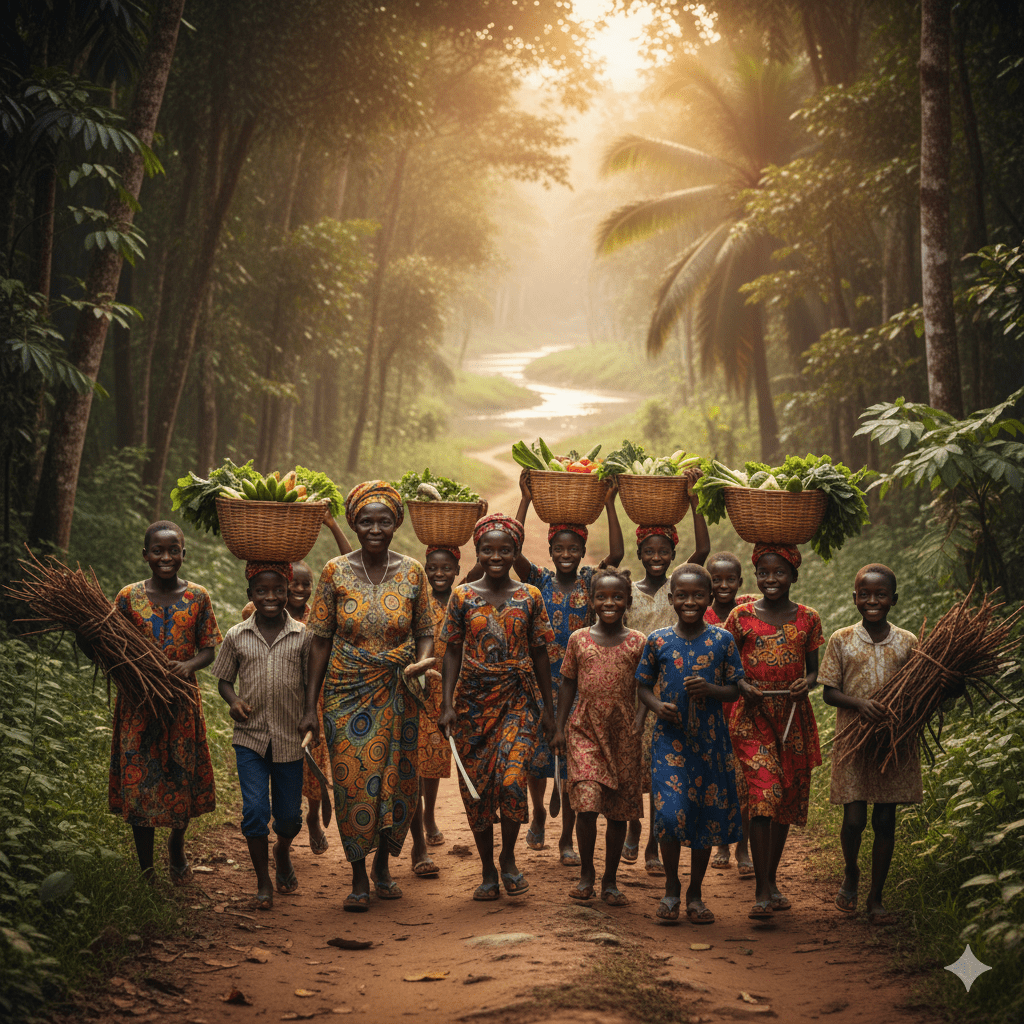
Each day began with a walk to the farms—30 to 45 minutes along narrow paths, tools resting on our shoulders. Fifteen to twenty of us moved together in a line, our laughter and songs drifting lightly across the fields. The rhythm of our steps, the chatter, and the occasional clink of metal against wood made the journey feel less like a chore and more like a ritual. The excitement of discovering snails, mushrooms, and other small gifts from nature along the forested paths added a sense of wonder, turning the walk into an adventure and a chance to connect with the land around us.
To ensure a steady supply, my grandmother grew a wide variety of fruits and vegetables and raised livestock. Goats and sheep were led to graze in the afternoons, while fowls roamed freely but always laid their eggs in familiar spots. With farms spread across four locations, household members were split into teams to bring food home daily. My favourite was the one near River Ayensu. We had to cross the bridge and walk right along the river bank to get to the farm . There was always something to see. Another was called “Agyei”. We used to cook delicious meals right in the farm.
Weekend Rhythms
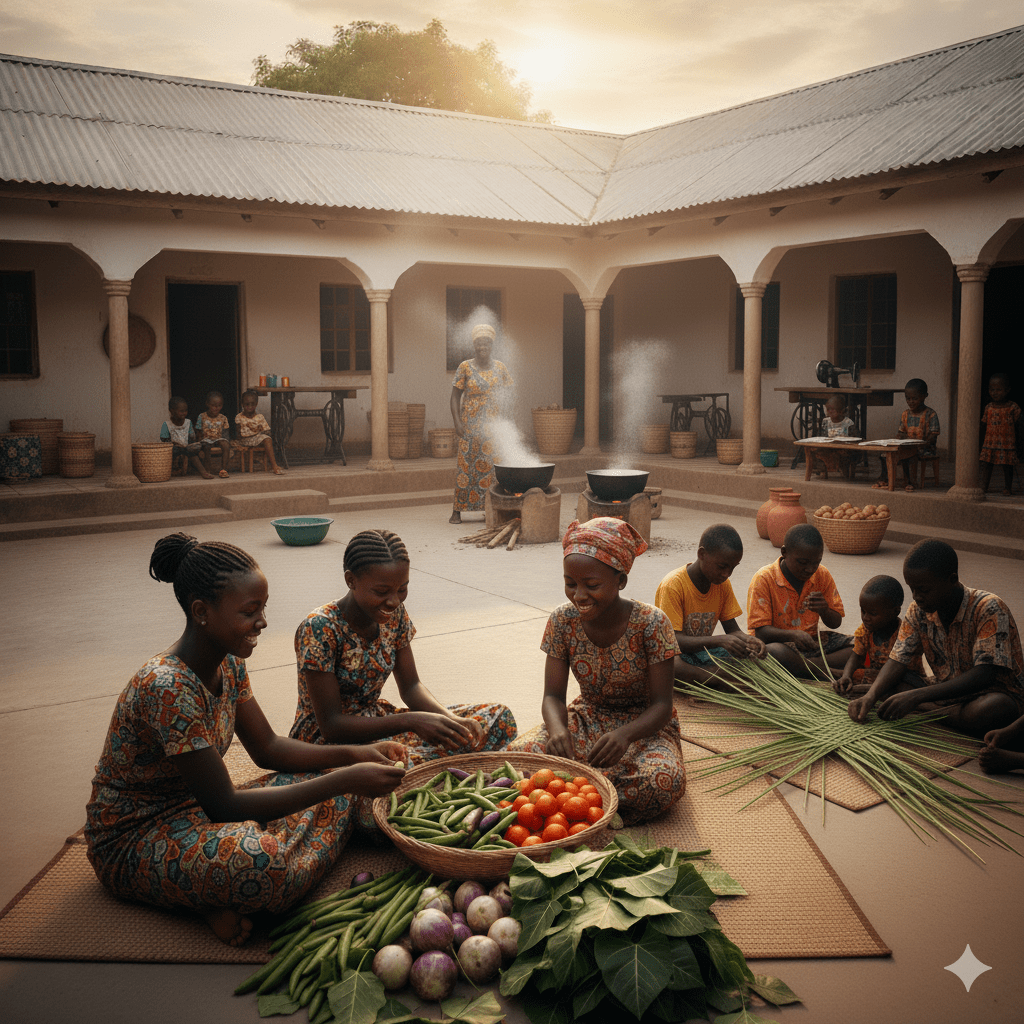
Weekends had their own rhythm. Saturdays began at 6 a.m., with everyone on the farms, and by 11 we returned home to process the harvest. Groups gathered in circles—some weaving brooms, others shaping baskets, or shelling dried corn. Even firewood and clay for pots came from the land, reinforcing the lesson that nature provided everything we needed if we worked for it.
Sundays, by contrast, were a day of rest. There was no farming; the entire household went to church, then returned home for a quiet siesta and preparations for the week ahead.
Lessons in Resilience and Generosity
The most immersive learning came during the two years I lived with her continuously. Even after my teenage years, during university breaks, I returned to her home. The rhythm never changed even in my adult years: morning service at the Presbyterian Church, study sessions, and long walks to the farm. She gathered herbs for teas and remedies, distributed surplus food to the less privileged, and taught us that generosity was as vital as survival. I remember days when I was tasked with delivering meals to a blind woman nearby and to an elderly man afflicted by a stroke. Other members of the household had their own assigned tasks, and we carried them out with joy, knowing that eager hands awaited the gifts we brought.
This disciplined yet nurturing environment became the bedrock of my resilience.Years later, after a traumatic burglary and the weight of adult responsibilities left me struggling with anxiety, I found solace and unexpected healing in gardening—a return, in many ways, to the rhythms of the land I had known as a child. Without hesitation, I began planting peppers, okra, lettuce, garden eggs, tomatoes, ginger, and other vegetables, alongside a variety of herbs and spices, filling my garden with life, color, and the promise of nourishing meals. I instinctively knew how to tend them—spacing, watering, sunlight—because the knowledge was already in me. What I had once thought of as chores had become life-saving skills.
A Philosophy of Life
My grandmother was a creator, a problem-solver, and a tireless believer in being fruitful. With her modest teacher’s salary, she managed to feed and educate a large household, not by money alone, but by harnessing skills, resourcefulness, and nature’s abundance. Everyone who passed through her home left equipped with survival tools and the confidence to provide for themselves. Today, we call this sustainability—but for her, it was simply life. Even at 91, she still sat quietly sewing with a simple needle and thread whenever textiles needed mending or alteration, her enduring spirit woven into every stitch.
The scent of damp earth and blooming plants still brings me back to her farms. They weren’t just fields of crops—they were sanctuaries where patience, resilience, and gratitude took root. “It’s a good thing to be able to do things for yourself,” she used to say. “It keeps you strong and free.” These words echo in my life. Her lessons remind me that true freedom comes from self-reliance, true beauty comes through patience, and true joy is found in gratitude.
It has recently dawned on me that I am unconsciously drawn to words like “organic,” “seed,” “harvest,” “nurturing,” “fruitfulness,” and “growth free from manipulation or deception.” I now realize that this inclination reflects my grandmother’s life philosophy—lessons learned not through lectures, but through the steady rhythm of her farms and the way she cultivated both land and people.
Looking back, I see her farms as a reflection of her life: deliberate, patient, abundant, and deeply rooted in values that endure. She showed me that the most rewarding outcomes are not forced—they are grown. Her quiet strength, resilience, and generosity continue to shape me today, a living tribute to the woman who taught me not just how to grow food, but how to grow in life.
Adelaide Adwoa Okorewaa Barnes (née Anaman)
…………….
I found unexpected healing in gardening by returning to the rhythms of the land. Have you ever returned to a childhood activity or lesson to find peace or healing as an adult? Let me know in the comments.
……………..
Your likes, comments, and shares truly motivate me to keep writing. If you enjoyed this story, please consider giving it a like! And if you’d like to read more, I’d love for you to subscribe to my blog
Some stories are more than just memories; they are testaments to a legacy that shapes who we are. Lately, I’ve found myself reflecting on my family’s journey, especially on the resilience, hope, and unwavering belief in people that defined them. It’s a powerful legacy, and today, I want to share a story that is at the very heart of it all.
My grandmother came from a truly remarkable lineage. My family from the maternal side came from a line of both Christian missionaries and royalty. My great-great-grandparents and great-grandparents were all dedicated missionaries under the Presbyterian Church. They believed fiercely in the power of faith and learning, ensuring that their own children were educated to the highest level possible and rooted in Godly nurturing. This spiritual and academic foundation was a core part of my grandmother’s identity. She herself was a woman ahead of her time, highly educated, and she spoke so fondly of her time at a German girls’ institution. This gave her a uniquely strict and philosophical view on learning that fueled her burning desire to see others, especially women, excel.
For the last 30 years of her working life—she retired at 70, with the last five as a volunteer without remuneration—my grandmother was a teacher at the Presbyterian school in Agona Kwanyako, located within the missionaries’ quarters known as Salem. For her, teaching was a calling, a way to combine education with a higher purpose and “imbibe the God factor” within her community. ———-
A Home for All
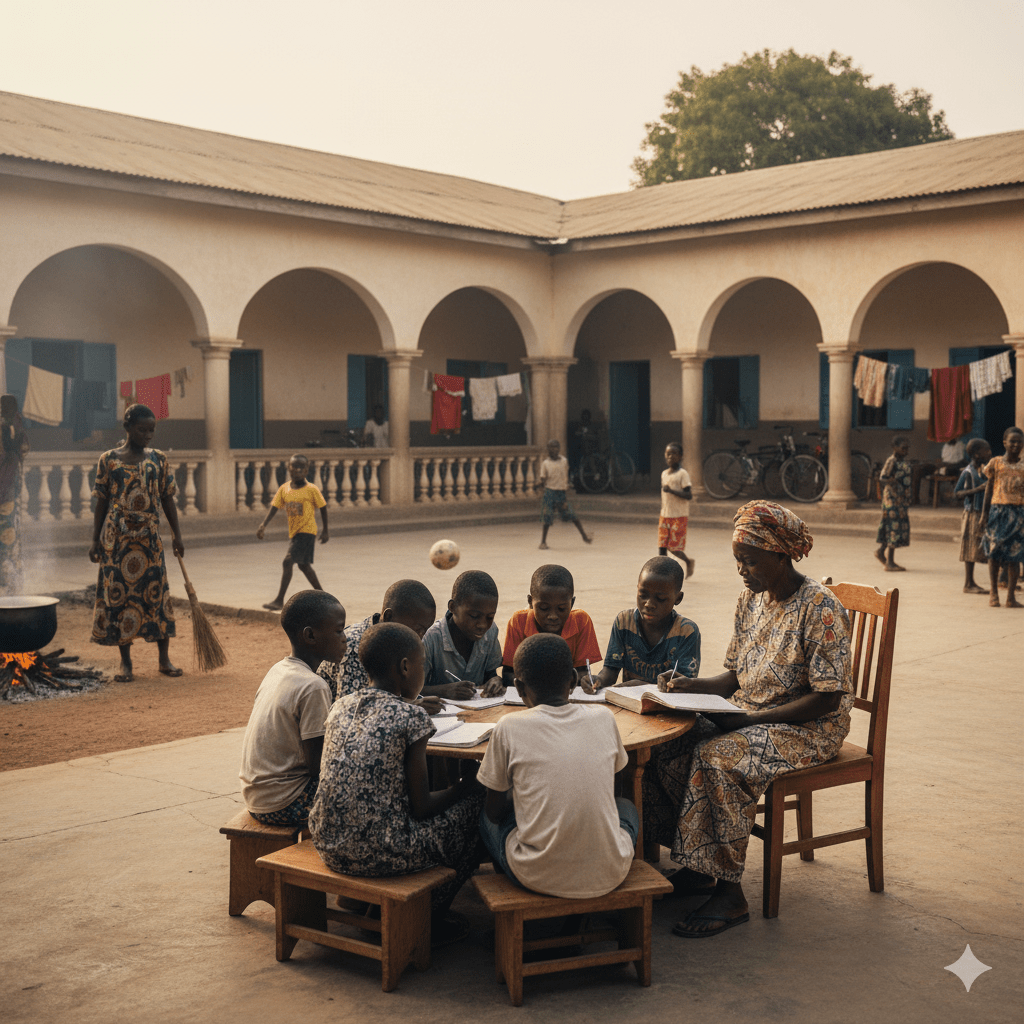
My grandmother’s home was more than just a place to live; it was a living, breathing hub of activity, a large traditional compound with a central courtyard and rooms that were always full. At the heart of it all was my grandmother, the unquestioned “boss lady,” a true force of nature who made the incredible chaos of over 20 children feel like a harmonious family. Her world was one of nurturing and learning, driven by a sacred duty to ensure every single one of them had a chance at life—especially those who were either school dropouts or had never even stepped into a classroom.
She had two distinct paths to fulfill this mission: a regular trip to our family’s village in Gomoa Buduatta to pick up family members, and journeys to nearby towns and villages whenever she heard about a bright child whose circumstances would deny them an education. She would bring them all back to her home, providing them with love, food, shelter, and everything else needed to ensure their success.
My grandmother’s commitment to education was not limited to girls. She believed in empowering everyone, and her efforts extended just as passionately to the young men in our family and beyond. At every family gathering, it was common to hear from at least 10 uncles reminiscing about how they had lived with her and how she nurtured them while personally catering for their education. For the women, eveyone had lived with her at some point during their schooling. In my adult years, I’ve met over 50 people in the last 5 years who would come to visit her, many of them strangers to me, but all of whom found a home with my grandmother at one point in their lives. She took care of them and personally ensured their education was seen through.
For many young people whose dreams of education were at a crossroads, my grandmother’s home became a sanctuary of last resort. It was common knowledge throughout the area that bright children who were forced to abandon their studies would simply find their way to our doorstep. They came knowing they would be welcomed, and that their education would be sponsored all the way to the tertiary or vocational level. Her unwavering belief was contagious, and her support was not limited to family. Strangers from nearby towns and villages, on the verge of giving up on their dreams, would also find our home. My grandmother, with her own “widow’s mite,” was always ready to provide that life-altering support. Her power of conviction and purpose was truly unmatched.
———-
A Legacy of Challenges Her mission came at a cost. Many families in the villages believed she had taken their children who should have been helping them on their farms. To appease them, my grandmother would send money to their parents each month. This was her way of showing them that education was a worthwhile investment. This incredible dedication, however, wasn’t without its battles. My grandmother’s own children and immediate family sometimes saw her mission as a huge burden she had placed on herself. They worried about the financial and personal strain of caring for so many children. There were heated conversations and difficult moments. Yet, she stood her ground, fueled by her deep-seated conviction that she was doing what was right. She believed so fiercely in the power of education that she was willing to fight for it, even with the people she loved most. ———-
A Timeless Encounter Despite everything she accomplished, my grandmother always felt she hadn’t done enough. This became hauntingly clear during her funeral, in a timeless encounter that defined her legacy for us all. A woman and her daughter, who looked about 18, arrived at our home. She entered wailing, asking if “Mrs. Barnes” was truly dead. She then cried bitterly, inquiring who would help her child who accompanied her , also called “Miss Adelaide Barnes.” No one in our family or the community knew her.
The woman shared her story: ten years earlier, she had traveled to our town on the recommendation of her daughter’s teacher, who told her about a Mrs. Barnes who could sponsor her bright child. My grandmother had welcomed her, given her money, and promised more help. But they lost contact four years earlier, after my grandmother’s hip accident after which her phone got lost and her number changed. In the meantime, her daughter had completed junior high school and was working as a kitchen helper, waiting for the promised help—only to hear of my grandmother’s demise.
The story broke our hearts. My family wept, but my mother’s reaction was one of powerful resolve . “It is unheard of for anyone named after ‘Mrs. Barnes’ to drop out of school and be a kitchen help,” she exclaimed, her voice thick with emotion. “My mother will weep in her grave. We will adopt this girl and see her through school.” It was a promise that became a new mission for us all. In that moment, we saw the full reach of my grandmother’s purpose—a commitment so deep it continued to change lives even after she was gone. ———-
An Enduring Legacy Her resolve was unwavering. She faced every challenge with a spirit that refused to break, a living testament to how one person’s profound passion can build a better future. And the most beautiful part of her story is the ripple effect of her generosity. Many of the young people she helped went on to become successful professionals. Now, they are paying her vision forward, giving back to their own communities, supporting the deprived, and ensuring her legacy of support and empowerment continues to grow.
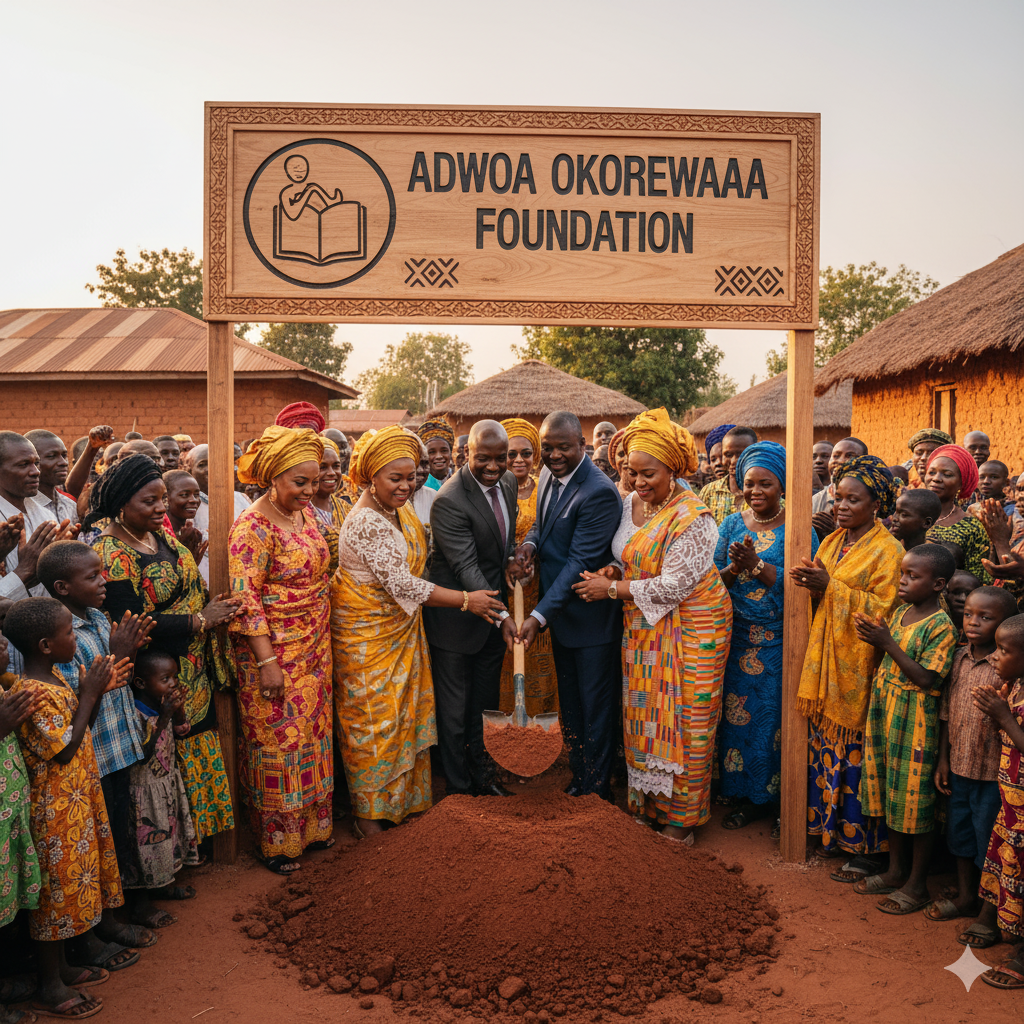
Her story is not just a memory to me; it is a living blueprint for a life of purpose. It reminds me that we all have a responsibility to be a light for others and to help those who are behind us. I feel a profound call to carry on her mission—to advocate for education and give the very best of myself to my community, just as she did. My grandmother proved that when you “educate a child, and you transform a nation” and I have made it my personal mission to ensure that lesson lives on. I am committed to creating a foundation in her name, dedicated to providing access to education for marginalized and deprived communities. It’s my promise to her, and to the world, that her legacy of love, education, and resilience will continue to change lives for generations to come.
AI-generated image.
…………….
This story is a powerful reminder of how one person’s generosity can create a ripple effect. What’s a small act of kindness you’ve witnessed that left a lasting impact? Share your story in the comments below!”
……………..
Your likes, comments, and shares truly motivate me to keep writing. If you enjoyed this story, please consider giving it a like! And if you’d like to read more, I’d love for you to subscribe to my blog
There’s been a constant presence in my thoughts lately: my grandmother. Her absence is a quiet space I’m still learning to occupy, a silence that echoes just how much she was the guiding light of my life. It’s only now, with her gone, that I’m truly beginning to see the full extent of how she shaped me.
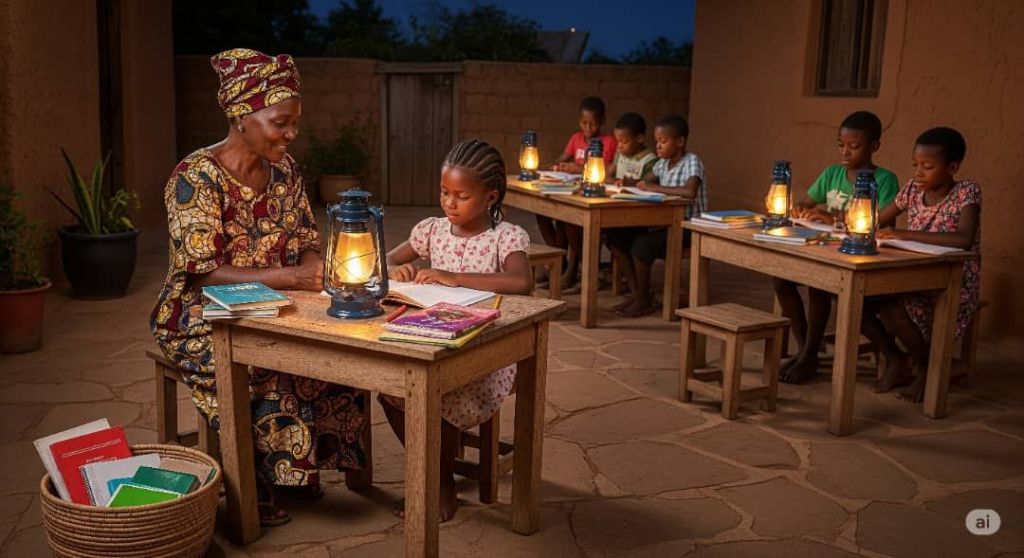
My grandmother was obsessed with knowledge. Books, newspapers, even old scrolls —if there were words on it, she believed there was something to be learned. She wasn’t just a collector; she was a teacher, finding lessons in everything from history to cooking and using them to create her own training materials. Her books were her most prized possessions—bought, gifted, or written by her own hand. She wrote every day until the very last weeks of her life. It was her primary passion, her purpose.
Growing up, it was a common sight for us to be woken at dawn, as early as 3 or 4 a.m., to read and learn. We grumbled, we cried, but she was unwavering. Her belief was that the brain was most receptive at that hour, and no matter your age, if you were under her roof, you were going to learn. This started when my siblings and I were barely four years old. It was incredibly frustrating at the time, but the impact of those early lessons would reveal itself decades later.
It wasn’t until I was 35 that I truly understood the depth of her teachings. My husband and I went out to a jazz club in Accra, Ghana. We ran into an acquaintance who was there with a musician who sang in an orchestra.As we talked about his career, the conversation drifted to classical music, specifically Mozart.
To my own surprise, I found myself participating in the conversation, not as an observer, but as an equal. We spoke about Mozart’s collections, his last compositions, and the raw emotion embedded in his work. I was discussing the psychological frame behind his music, the very notes and their meaning. The musician, amazed, asked if I had studied music. “No,” I said, and that’s when it hit me. I was talking about Mozart, a composer I hadn’t thought about since I was a child.
Then, a vivid memory came to me: my grandmother’s books. When I was just seven years old, she had a literary collection on Mozart—his biography, his pieces, their composition, and their unique interpretation. She had made me read them, and unconsciously, that knowledge had stayed with me for over 30 years.
We talked for over an hour, and when the musician’s friend asked how I knew all of this, I said, “My grandmother taught me.” He was astonished that a woman who wasn’t a musician herself had taught me so much about a subject. But that was her genius—she believed that if you read a book, you should understand it. She would make me read and then explain the content, whether it was history, science, or, in this case, music.
When I got home, I called her immediately, bubbling with excitement. I told her how everyone was shocked and how I was amazed that I could hold such a conversation. Her response was simple and profound: “This is just the beginning.”
She taught relentlessly because she believed that every lesson would one day inform our lives, our contributions, and the value we brought to the world. She gave us a rounded view of life, not just for the present, but for the future. Her teaching methods were designed for the knowledge to stick, to become a part of who we were. I’ve realized how many other things I’ve learned from her have surfaced in unexpected conversations—from farming to the philosophies of ancient greece!
It’s hard to process her absence, but I know she is smiling wherever she is. She always said her wish was to continue teaching and writing until her last breath. Her passion was to pass on knowledge, and she fulfilled that mission every single day.
Through her, I’ve gained skills and a perspective that continue to define my academic and professional growth. I don’t just see things as they are; I see their history, their meaning, and their potential. My grandmother was truly unique, and her legacy of learning is the most precious gift she could have ever given me.
In her absence, I’ve come to understand that her teachings weren’t just about accumulating facts; they were about a holistic approach to life. My grandmother’s unwavering belief that every lesson would inform our future is a testament to her profound love and vision.
Adwoa Okorewaa was a master architect of a life well-lived, and I am her most grateful student.
…………
👉My grandmother’s lessons on Mozart were an ‘unseen curriculum’ that taught me about life’s rhythm. What’s a lesson you learned from an unexpected source—like a song, a book, or a simple routine—that has shaped your life? Leave your comments below!”
……………..
Your likes, comments, and shares truly motivate me to keep writing. If you enjoyed this story, please consider giving it a like! And if you’d like to read more, I’d love for you to subscribe to my blog
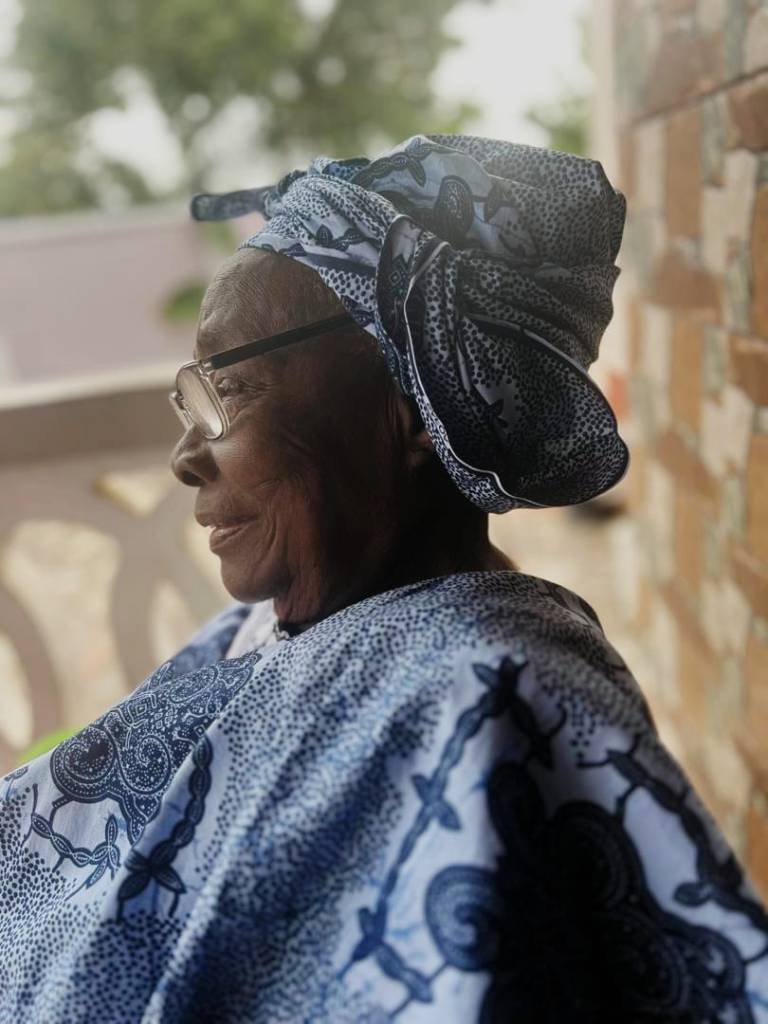
My grandmother, my muse and my anchor, lived a beautiful rich 92 years until she was called to eternity . Now that she’s gone, every memory of her shines brighter, especially those tied to the simplest, yet most profound, acts of her love .
One of such consistent acts revolved around my childhood and adult struggle with food.Growing up, I was an incredibly picky eater. It wasn’t just about the taste; the texture, the smell, and even the presentation of food could send shivers down my spine and turn me off completely.
This pickiness often led to me being punished or scolded by my parents for refusing a meal. Sometimes, a mere scent was enough to make me physically ill. For instance, the smell of goat meat which is a known delicacy in West Africa being prepared would fill me with such nausea that I would sometimes throw up for days. As a result, whenever goat meat was on the menu, I was kept indoors or far away from the kitchen, a lonely exile from the family meal.
My grandmother, who lived a couple of hours away, was keenly aware of my unique eating habits. She knew, with an understanding that transcended words, that I preferred my cornmeal , proteins, vegetables and my favourite palm nut soup prepared in very specific ways. She even knew precisely how I liked the small, fresh fishes used in our special “Ntitii” sauce to be cooked. It had to be the perfect mix of spiciness, freshness and taste. Her heart, ever so tender, worried constantly that I would go hungry or face my parents’ disciplinary hand.
So, with a devotion that still brings tears to my eyes, she would often make the journey to bring me the food she knew I would eat. It wasn’t unusual for her to arrive early in the morning, a beacon of comfort, with special meals wrapped in local leaves or with some perfectly fried fish , 3tsew and accompanying soups. Her visits were a sanctuary, a quiet promise that I would be nourished, body and soul.
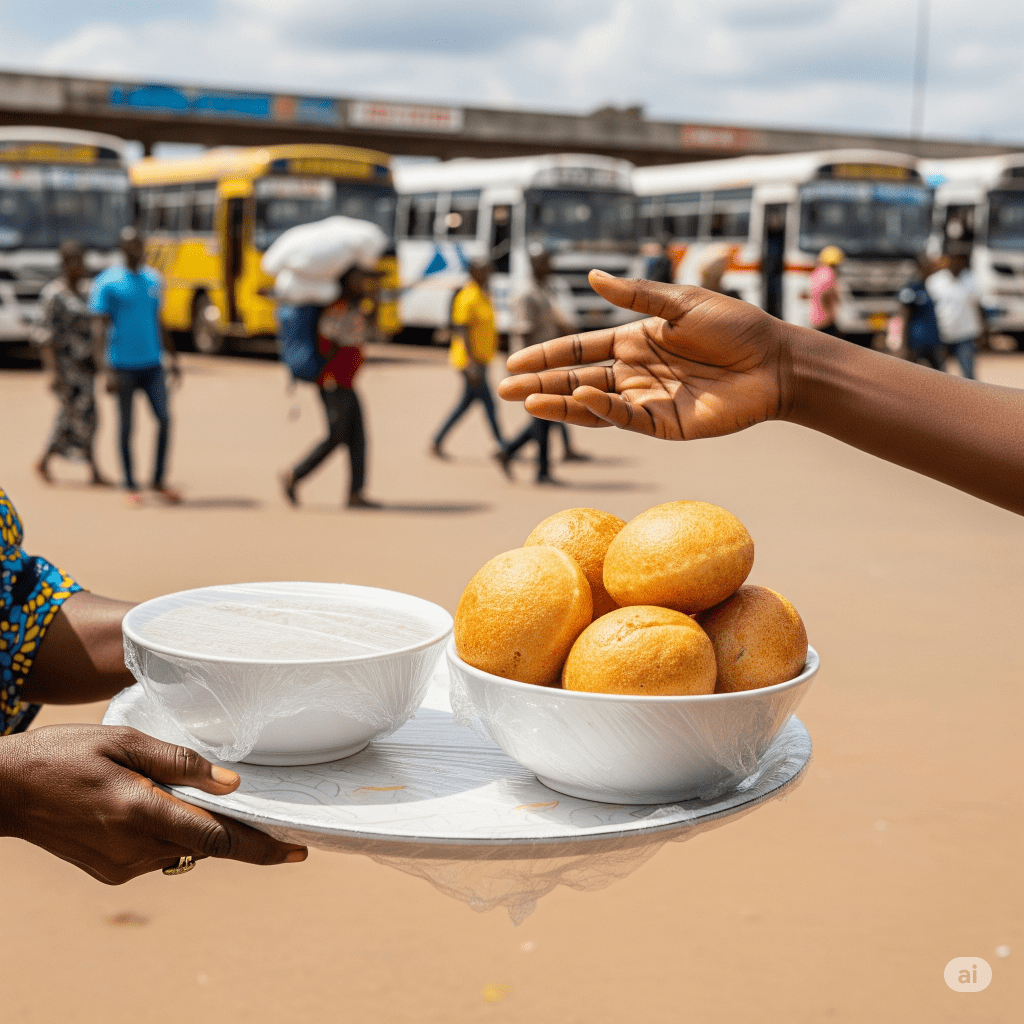
One of the most vivid and cherished memories unfolded on a morning when I was in junior high school. The local cornmeal porridge had been prepared with milk, a combination I found utterly repulsive. As was often the case, I refused to eat, and after a few spankings from my father, I was told I’d go to school hungry. I remember the sting of tears mixed with the pangs of hunger as I sat in the car with cold stares from my sibilings to school that day.During the morning assembly, a former classmatein primary school but in a different class, Sabina Appiah , approached me. In her hands, she held a package of hot porridge and some puffy puff, a local pastry. My confusion quickly turned to apprehension; I had been taught never to accept food from strangers, especially with the unsettling wave of kidnappings around that time. I asked her why she was giving me this meal, which, ironically, was my preffered kind of porridge. Her answer left me speechless: “Your grandmother gave it to me for you.”I was stunned.
My grandmother lived hours away, obviously had teaching to do at her local school that day and the roads were notoriously bad. So this was not possible…I thought! Sabina then recounted the extraordinary tale: She had been waiting for a car at the main transport yard in “circle” when a woman in a teacher’s uniform approached her. My grandmother, with her uncanny intuition, had recognized Sabina’s Achimota school uniform. She asked for Sabina’s name and class, and then, with a knowing glance, told her she was almost certain I hadn’t eaten breakfast. She entrusted Sabina with the food, a silent testament to her boundless concern.Still slightly disbelieving, I asked Sabina to describe the woman. Her description was unmistakably my grandmother. She even mentioned my grandmother saying she was from “Agona Kwanyako.” The pieces clicked into place. I took the food, ate it, and felt an overwhelming wave of relief wash over me.Yet, a lingering fear remained.
AI-generated image.
I thought it was a strange twist of fate, and I worried my parents would punish me for taking food from a stranger. I kept the incident a secret for two weeks, until my grandmother came to visit. The very first words out of her mouth when she arrived were, “Did you receive the breakfast I sent to you through your friend, Sabina?”Everyone in the house was surprised, having heard nothing of it. My grandmother then explained that she had been on her way to the Ministry of Education that morning when she spotted Sabina. A profound instinct told her I needed that meal. In her incredible generosity, she had even bought a meal for Sabina too!
My grandmother’s love wasn’t just for grand gestures; it was a consistent, personalized devotion. She would often come by early in the morning to Accra just to drop off food items, condiments and special meals for me. She came early in order to make a return journey back to Agona Kwanyako that very morning to start teaching at 8:30am! Even as I grew older and visited her, she would prepare my favorite dishes exactly the way I liked them, going out of her way to ensure my comfort. This was one of the most intimate experiences I shared with her, a memory I hold closer than ever now that she’s gone. She was thoughtful, loving, and possessed an extraordinary ability to make me feel seen and cared for, even when I felt like the “weird” one, the odd one out.
This is just the first of many stories I hope to share about my grandmother, about our unique relationship, and the countless memories I have of her. Her presence was a comforting constant, a personalized connection that went beyond the everyday interactions she had with her other grandchildren. Her love was a force, a quiet strength that shaped me. Her passing leaves a void, but the warmth of her love, especially those gestures stepped in faitb and godliness, continues to nourish my soul.
Adwoa Okorewaa’s life teaches us the profound power of personalized love, unwavering resilience, and the lasting impact of thoughtful gestures. May her spirit inspire us to cultivate such empathy and consistent support in our own relationships, building trust and connection that truly endures.
……………
This story is a powerful testament to the impact of intentional, personal acts of love. What’s one memory of a loved one going the extra mile for you that you’ll always cherish? Share your story in the comments below! Let’s honor these quiet heroes who shape our lives.
……………..
Your likes, comments, and shares truly motivate me to keep writing. If you enjoyed this story, please consider giving it a like! And if you’d like to read more, I’d love for you to subscribe to my blog
This blog is inspired by the life and legacy of my grandmother, Adwoa Okorewaa, whose strength, faith, and wisdom continue to guide the reflections shared here.