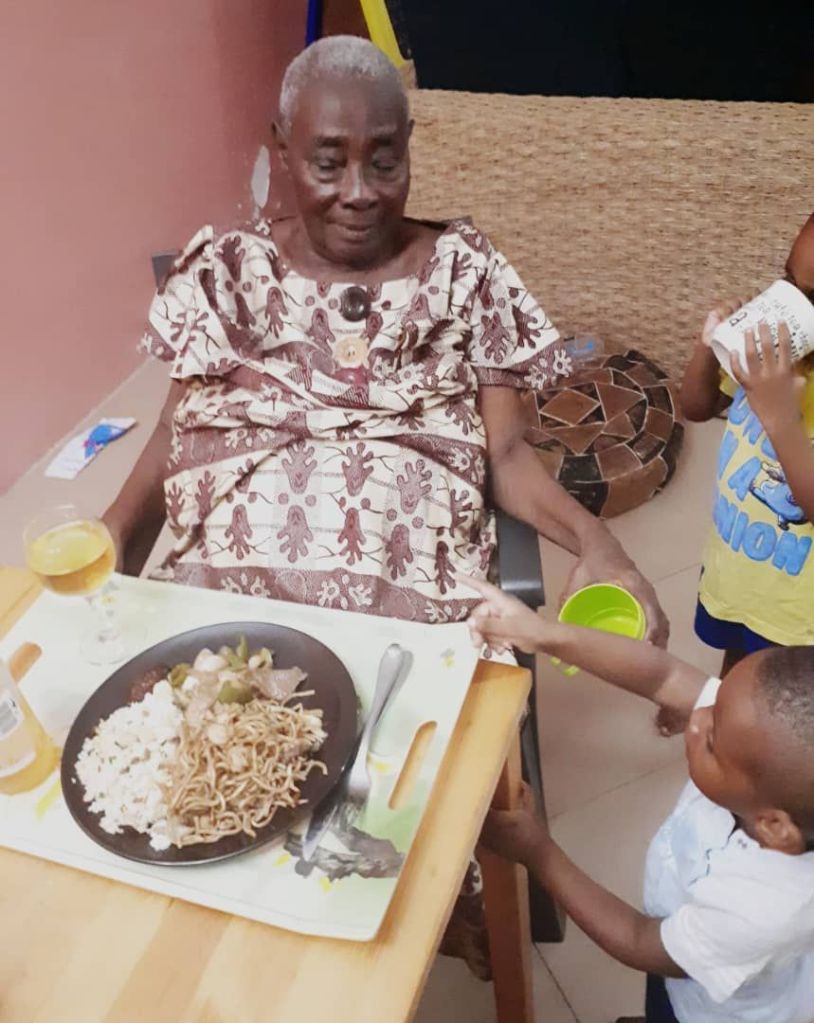
• On illness, faith, and the second chance I almost missed

    The storm came fast and changed the air,
    It left a person standing there.
    I did not know. I did not choose.
    With so much lost, I feared I’d lose
    The very heart of who I am,
    Broken like a fallen dam.

    I used to run. I used to strive.
    I thought that was what meant to thrive.
    But when my body slowed to rest,
    I put my spirit to the test.

    I had to learn to sit quite still,
    To climb a different kind of hill.
    It is not the life I had before.
    I had to close a heavy door.

    But in this room, the light is soft.
    I hold my heavy heart aloft.
    I am different now, and that is okay.
    I am finding beauty in the gray.


    A life paused, a faith that stayed

    It’s been a minute! Not for lack of words, but because the months between November and January have been one of deep reflection that changed me in ways I am still learning to understand.

    I celebrate my birthday in November. This year, it was quiet. I was unwell, so I stayed home and later went out for dinner with my family. What I missed most was my grandmother’s voice. Every year, she made my birthday feel sacred. She reminded me that it was not just a celebration, but the day I was born and given purpose. This year, for the second time in a row, that voice was absent, and the silence felt heavy.

    December made that absence sharper.
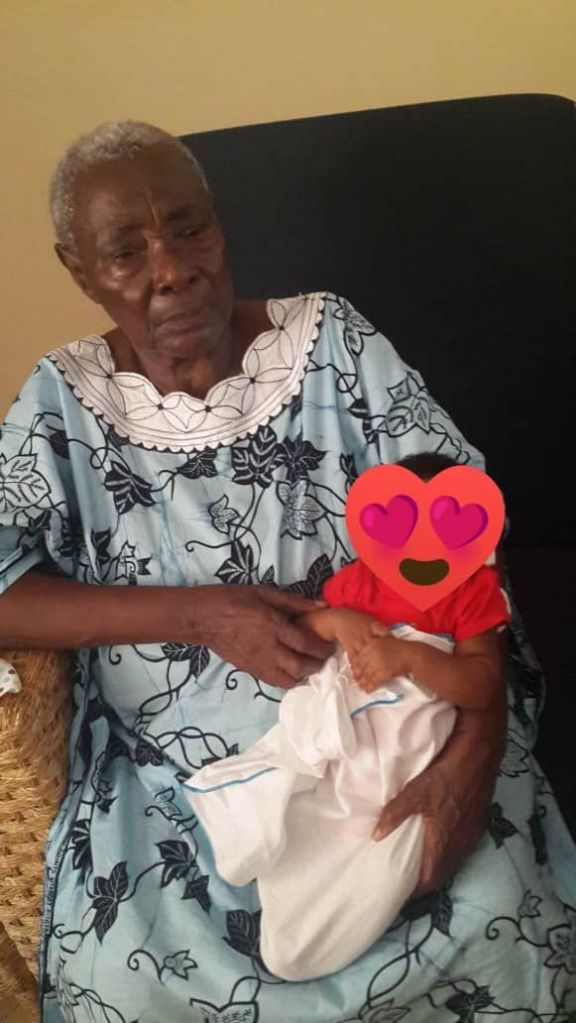
    December 19 is my grandmother’s birthday; she would have been 93 in December 2025.
    But by a twist of fate, in December 2022 it also became my second birthday.

    The year 2022 was challenging. I had relocated for work a year earlier and was still adjusting to a new culture, while carrying career pressure and family responsibilities. My body eventually gave in. I had COVID. I had chickenpox for the first time in my life. I fell ill several times, but the most frightening episode came in November, when what seemed like a common flu turned into a critical illness, and I temporarily lost my hearing in both ears after weeks of treatment. In early December, I faintly regained hearing in my left ear, and I felt lucky.

    I was advised to see a specialist. The appointment was scheduled for December 19

    .

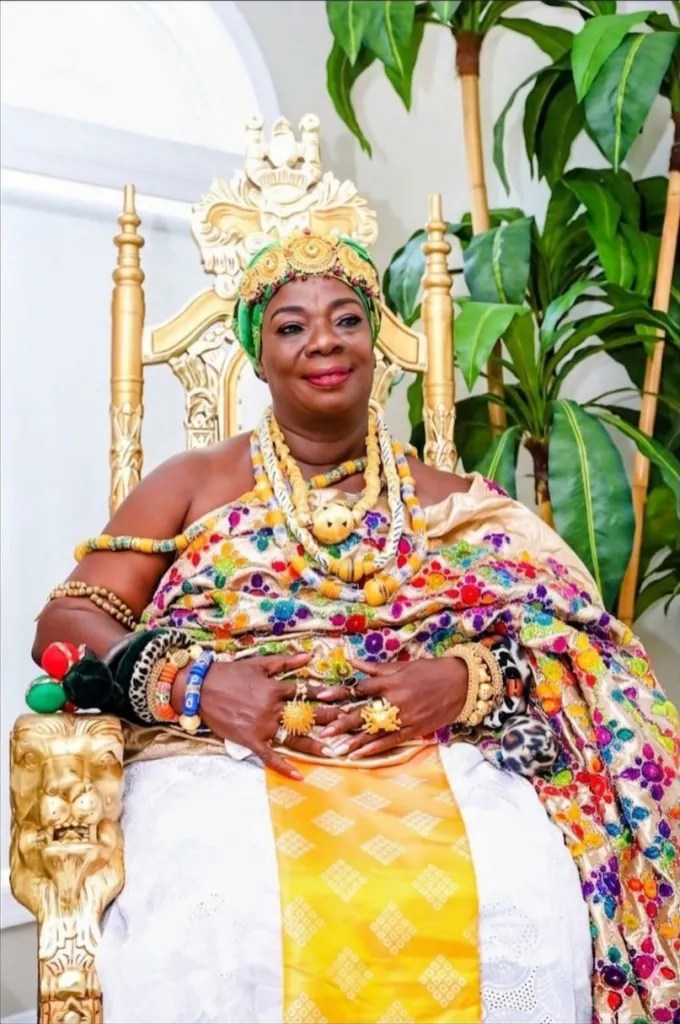
    Adwoa Okorewaa – December 19, 2022

    That morning, I called my grandmother to wish her a happy birthday. She was preparing for her ninetieth celebration. I struggled to hear her as my own hearing was slipping. A few hours later, everything changed.

    The specialist found something serious, something usually described in textbooks and rarely seen in practice. I was told that the largest hospital in the country, though only thirty minutes away, might be too far given my condition. I needed to reach another major facility within fifteen minutes. The doctor made calls and cancelled the ambulance; even a five- to ten-minute delay could be life-threatening, and he believed a private vehicle was the fastest option. I knew something was wrong, but I did not fully understand how close I was to the edge. I was admitted immediately. From that point, my memory fades. I lost consciousness, drifting in and out.

    When I opened my eyes, I was surrounded by doctors and specialists who looked genuinely puzzled. Many were amazed that I was alive. I was later told that based on my condition, survival had not been expected.

    I remember times when student doctors were brought in to have “a look” at the peculiar case and what felt like a medical miracle. It felt funny to me then. But that’s a story for another day.


    Becoming the miracle I am

    Days passed. And then came the moment that changed everything.

    For the first time since I had been admitted, I heard my grandmother’s voice.
    Clear. Familiar. Steady.

    She said in Fanti dialect,
    “I have been praying. I kept faith. I knew you would come back to us. I thank God for bringing you back. This is your second chance, your rebirth.”

    I felt the weight of everything I had been through, and the miracle of simply being there, alive. Those words stayed with me. They still do.

    In that moment, I understood something I had overlooked for years: the quiet power of constant prayer. The strength of faith lived daily, not loudly. Wherever I was in the world, my grandmother prayed for me morning and night. That carried me when my body could not.

    In those early days, I sometimes could not remember my own name. Months later, I was my talkative self again. You would never imagine how ill I had been.

    But I felt it.
    I knew it.
    I was different.

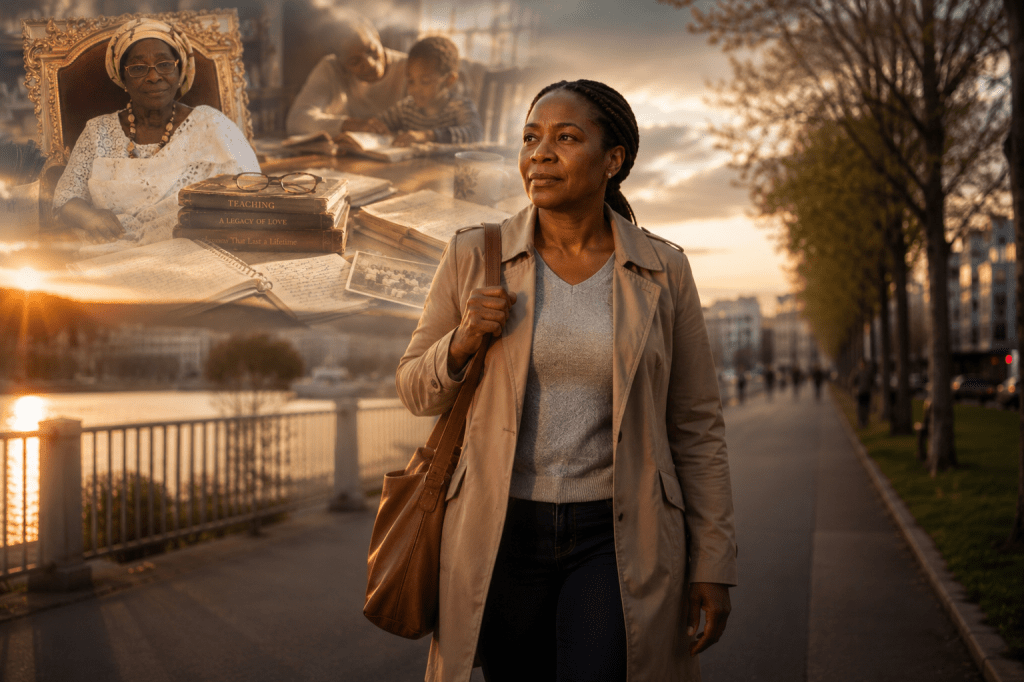
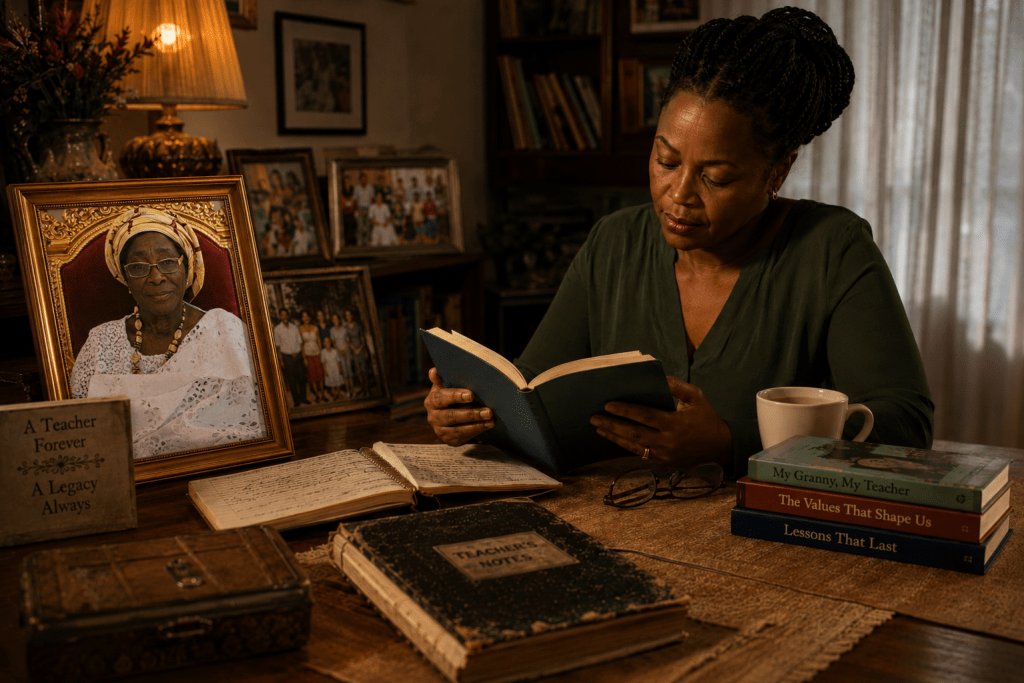
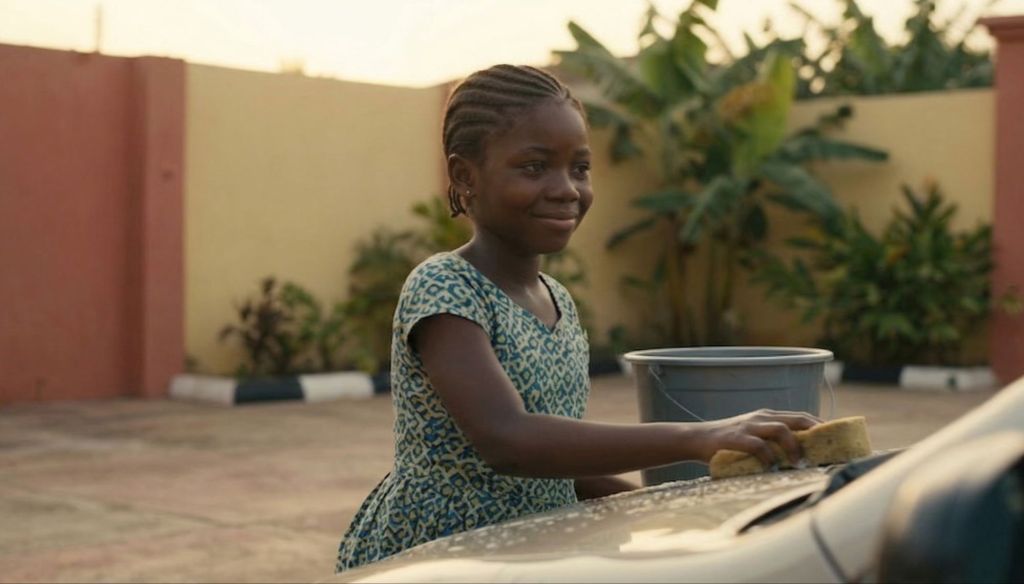
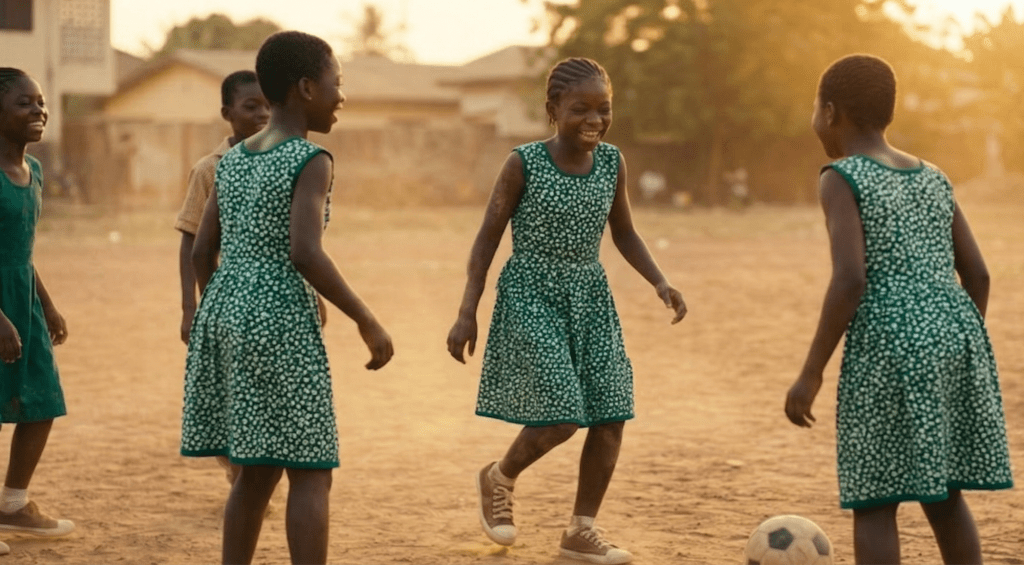
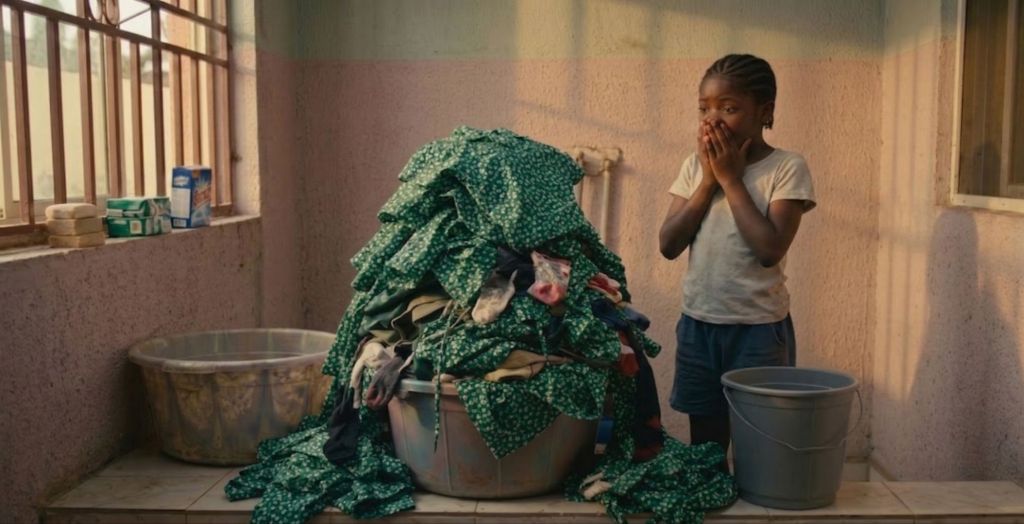
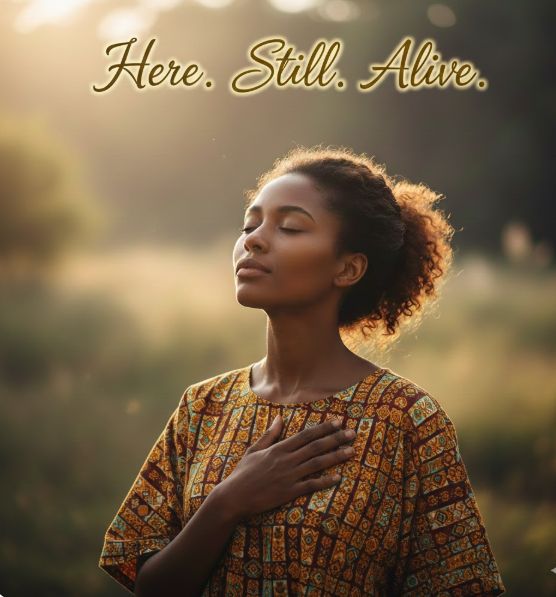
    AI generated image

    For nearly three years, I had been focused on becoming who I was before. Before illness. Before everything changed. In doing that, I forgot to be thankful. I forgot to see the purpose of the miracle I survived. I wanted my old life back instead of honoring the new one I had been given. I kept asking myself why I could no longer work for fifteen hours without a break, why the energetic woman who stayed sharp and active for days without rest seemed to be gone.

    I survived, but I had not yet learned how to live.

    Then, on December 30, 2025, it finally became clear.

    This second chance was not meant to take me backwards. It was meant to move me forward. I was not saved to return to who I was. I was saved to become someone new.


    New Year, New Moi

    AI generated image

    As I step into 2026, I am letting go of the idea of the vibrant girl I used to be. For a long time, I lived with frustration and felt broken. But now, I am choosing a different kind of strength. I have traded speed for breath.

    I used to measure myself by how fast I could go.
    Now, I measure myself by how deeply I can breathe.

    I did not ask for these cracks, but I have learned that gold shows best in them.
    This year is not about fixing myself.
    It is about accepting the miracle I have become.

    My grandmother never taught through grand speeches. She taught through how she lived: with quiet prayer, steady presence, and trust during uncertain seasons. She believed that change was not something to fight, but something to meet with patience and grace. For anyone shaped by loss, transition, or a life that unfolded differently than planned, her values offer a gentle guide.
    Slow down and listen to what life is asking of you now. Give yourself permission to pause without self-judgment. Ask for help when you need it. You can choose small, intentional steps forward, grounded in gratitude, faith, and self-compassion. Sometimes, the bravest action is simply allowing yourself to live differently and to live well.

    More fragile, yes. Somehow more whole.
    If I seem different, it is because I am.
    November brought me into the world.
    December 19 brought me back.

    No one else may see the difference.
    I do.
    And that is enough.

    AI generated image


    Thank you for reading.
    This one felt important to write.
    I waited to share this until I could speak from clarity, not just pain, and because my second chance asked to be lived, not hidden.

    If this story resonates, pause and notice the quiet miracles in your own life.
    No one else may see the difference.
    You do.
    And that is enough.
    I’d love to hear your thoughts or reflections.Feel free to leave a comment below.

  • AI Generated Image

    Over the last few weeks, I have found myself reflecting deeply on my work, the people I encounter, and how easily society misjudges value. In human resources(HR), I work with people every day. I help leaders make decisions, support employees, settle issues, and build trust. But nothing I’ve done professionally has shaped my understanding of people as powerfully as what I learned from my grandmother.

    In today’s world, we celebrate the loud, the bold, and the charismatic. We assume the first person to speak is the smartest. We equate visibility with competence. But my life tells a different story. And the earliest chapter begins with my son… and with my grandmother.

    My Grandmother: My Son’s Story

    AI Generated Image

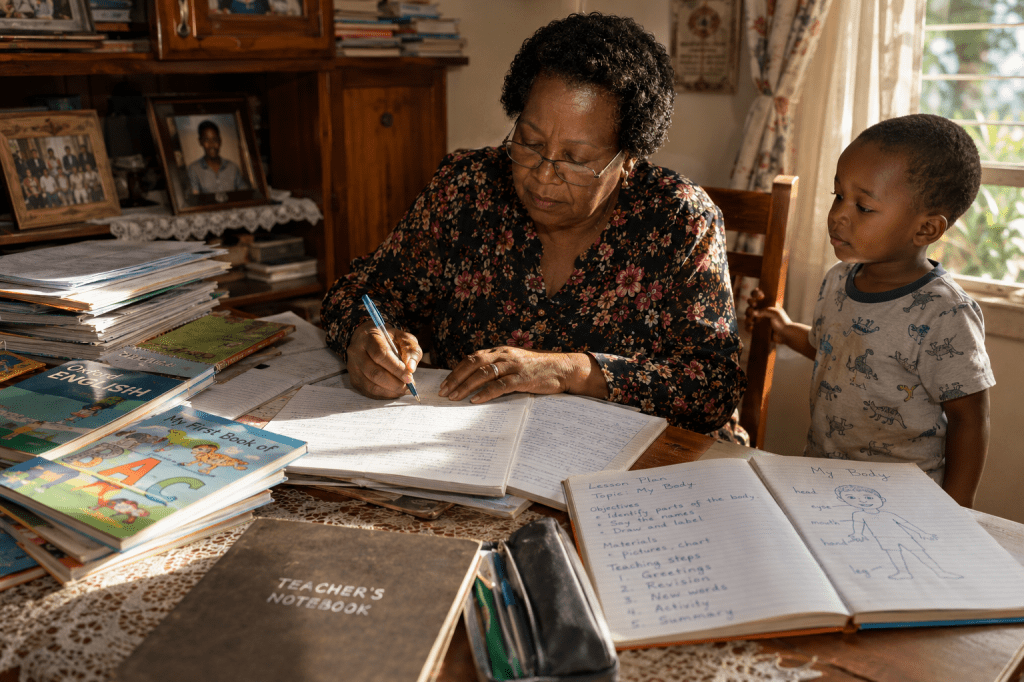
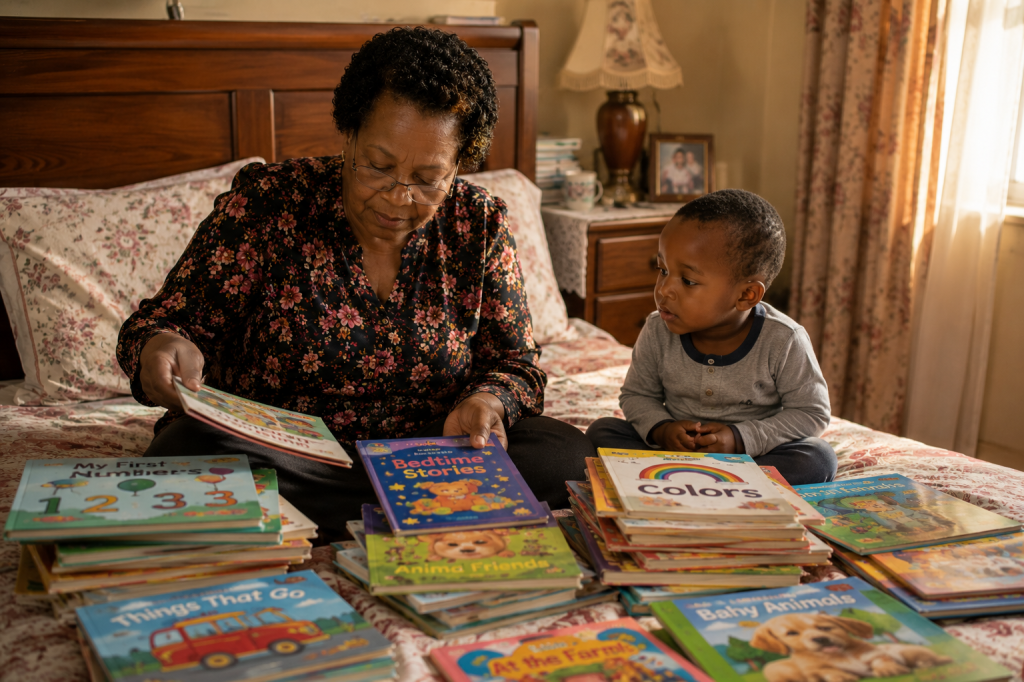
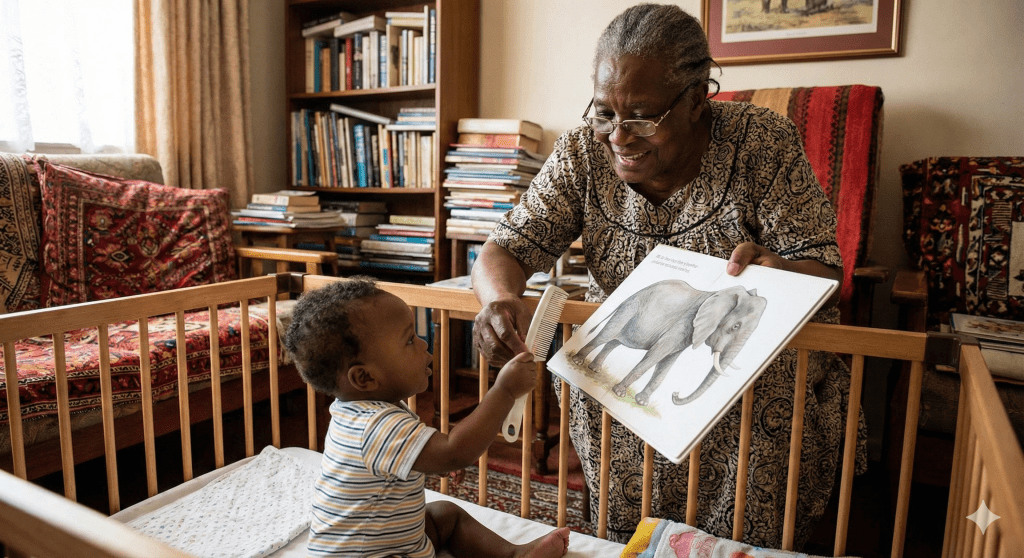
    When my son was six months old, he started sleeping in my grandmother’s room. And she turned that room into a classroom. She read Shakespeare, history, even complex stories that made us wonder if she remembered he was a baby. Sometimes she taught him simple words like “comb,” or pointed to a picture and said, “This is an elephant. This is the trunk.”

    We teased her often.

    But she always replied with quiet conviction:
    “Children see and hear everything. There is nothing wrong with teaching a child early.”

    We shrugged. But she continued. And my son loved it.

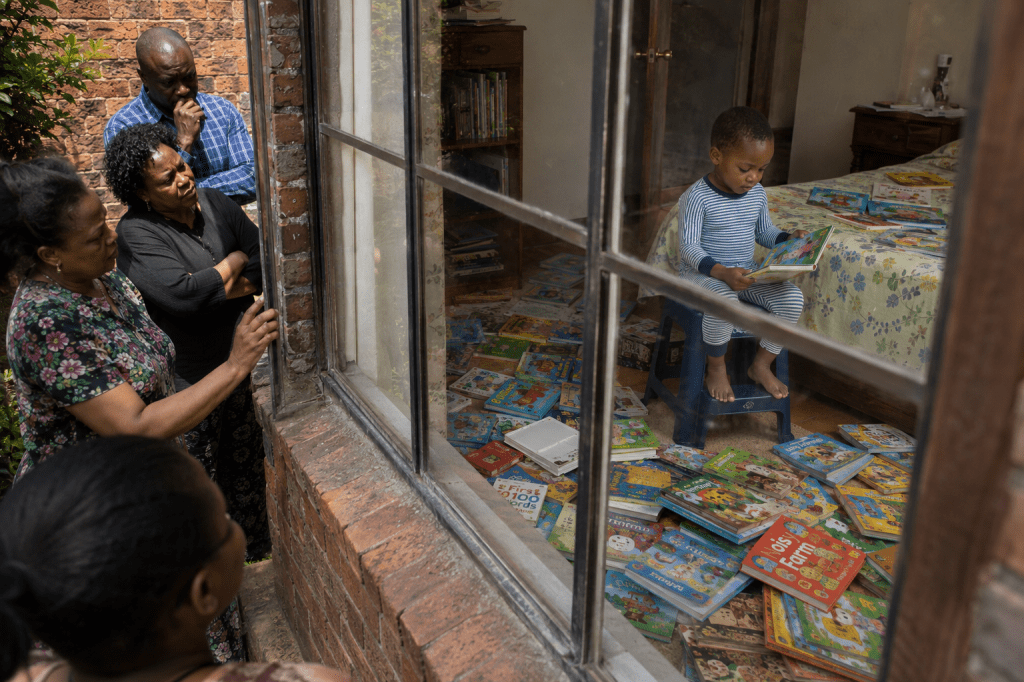
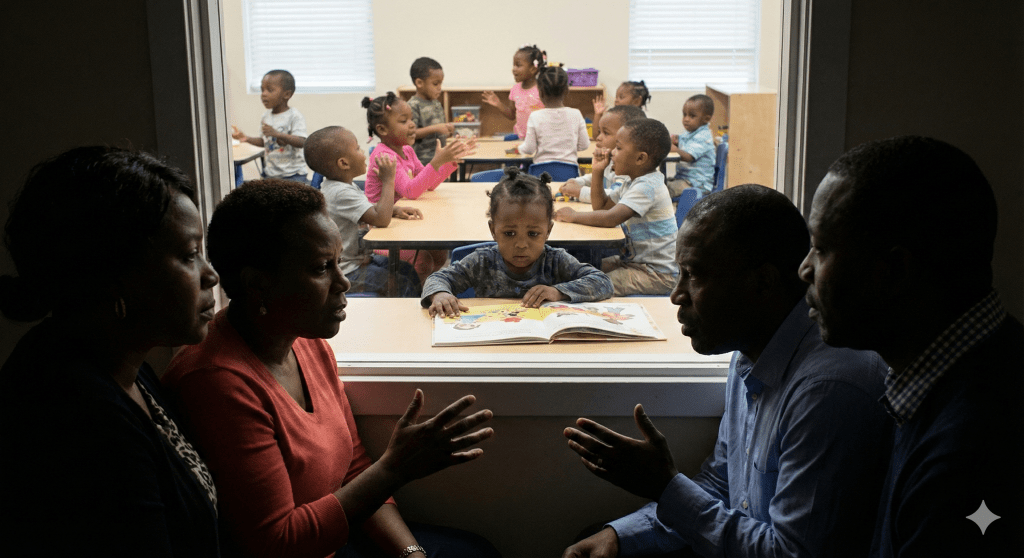
    When he turned one, we enrolled him in an excellent school. After three weeks, I was called for an urgent meeting. The teacher and school administrator looked very concerned. They said my son was “too quiet” for a child his age. He did not make the playful sounds babies make. He did not join the noise of the class. He looked quietly at everything and did not verbally respond in the way they expected. They believed he had a speech or developmental delay.

    They referred us to a speech therapist and a developmental specialist.

    I left in tears.

    At home, I shared everything with my grandmother. She looked at me with a mixture of disbelief and annoyance. She said there was nothing wrong with her great-grandchild. She insisted that he spoke all the time. According to her, he talked, reacted, and even repeated things she taught him. I had not seen any of this because he did not do it with anyone else. Or perhaps, we didn’t do them with him.

    The Moment Everything Became Clear

    My grandmother asked to accompany me to pick him up one day. She carried her usual small bag with a book inside. When we arrived at the school, the teacher came out with my son. As soon as he saw my grandmother, he ran straight to her. She took out her book and he quietly leaned close to her, fully engaged.

    When the teacher approached and repeated her concerns about his speech, my grandmother interrupted gently and asked her if she truly believed he had a speech problem. The teacher said yes. My grandmother said calmly:

    “Move him slightly away from the noise on Monday and give him paper. Ask him to write two-letter and three-letter words. Show him words and let him pronounce them. You will see he does not have a speech problem.”

    The teacher was skeptical.

    But a week later, she called in pure amazement. She said my son could talk. He formed sentences. He wrote two-letter and three-letter words and pronounced them clearly. She said he was observant, attentive, and simply uninterested in the noise they were using to stimulate sound-making. He was engaged when the activity matched how he learned. She said, “He actually talks. He’s not delayed. He is different.”

    From that day forward, the school adjusted how they taught him. They created a new learning path for him. And he blossomed.

    That day, my grandmother taught all of us something priceless:
    Silence is not a deficiency. Different is not wrong. Not every child speaks the language of noise.

    My grandmother saw what the world missed. She always did.

    Different is not less. Quiet is not a flaw.

    AI Generated Image

    Years later, when I started working with a large international organization, I met a group of interns and young national service personnel. In every group, there are always the ones who shine loudly. They talk a lot. They present themselves confidently. They are visible.

    And as expected, people naturally paid the most attention to them.

    But there was another young lady who was different. She was quiet. She almost never spoke during team meetings. She avoided the spotlight. Many people overlooked her. But because of what I had learned from my son and my grandmother, I noticed her.

    I made a deliberate decision to get closer to her.

    During lunch, I chose to sit near her. I tried to understand who she was. And slowly, she opened up. I discovered that the quiet young woman was extraordinary. Inside this gentle, quiet person was depth, creativity, and insight that meetings had never revealed. She simply was not the type to speak loudly in a room full of people. She needed space and trust.

    For most of her internship, nobody saw this.

    Then one day, another intern who usually assisted a senior manager was unavailable. Out of necessity, the manager assigned a task to this quiet intern. It was a simple assignment with minimal instruction. Just a few lines on what he needed.

    Within a few days, the manager came to me in complete awe. He told me she had produced work far beyond what he expected. She had developed a full proposal with fresh ideas and creative solutions. It was detailed, clear, practical, and innovative. He could not understand how someone so quiet had such brilliance hidden inside her. And why no one noticed.

    He said he wanted to keep her for a position he was creating.

    But she declined. She said it should not have taken a whole year for anyone to see her worth. She wanted to pursue other skills, thrive in an inclusive environment, and moved on.

    We lost a rare talent because nobody had looked past the surface, and we did not see her soon enough.

    She earned an important international scholarship soon after and today, she works for a global firm. She is thriving. We still talk. And every time her name comes up, I remember how humbling the experience was to the managers who overlooked her.

    Seeing What Others Often Miss.

    AI Generated Image

    This week, I encountered a situation where an excellent employee was being unseen and relegated to the background simply because he was not loud. He never came up in discussions. His potential remained untapped, and I couldn’t help bringing this up with the head of the unit. I met another young female entry level employee who assumed I did not see her or know her work. I actually chided myself, because with all the chaos that has enveloped the development sector over the past ten months, I have been so overwhelmed that I never had proper conversations with her whenever I walked into her office. What she didn’t know was that her skills, talent, and quality of her work had come up several times in my conversations with senior managers in her programme and even some outside.

    We had a quick one-minute conversation this week, and she reminded me of that earlier incident from years ago. if you are reading this, “M” I see you! And happy we had a chat.

    In our world today, people are tagged too quickly. We equate loudness with intelligence. We assume visibility equals value. We label children and employees simply because they do not fit the expected rhythm. But some of the brightest minds sit in silence. Some of the strongest talents speak softly. Some of the most creative souls do not perform for the world.

    To the Quiet Ones: Lessons from My Grandmother

    Your likes, comments, and shares truly motivate me to keep writing. If you enjoyed this story, please  give it a like and share ! And if you’d like to read more, I’d love for you to subscribe to my blog

    For those who are quiet, observant, introverted, or simply not competing with the noise around you, hear this:You are not less. You are not invisible. You are valuable.

    And to leaders, teachers, parents, and managers:
    If you are not seeing the quiet ones, you are missing brilliance and missing diversity in its truest form.
    Inclusion is not only about who speaks the loudest, but who is given space to be fully themselves.

    One of my earliest lessons in diversity and inclusion came from a quiet grandmother, a quiet child, and a quiet intern. They taught me that powerful voices do not always rise above the noise. Sometimes they wait to be invited, noticed, and valued.

    Their wisdom shaped my core values:
    patience, discernment, respect for difference, the courage to see people deeply, the wisdom to look beyond noise, and compassion for the overlooked.

    These guide my work and my life.
    They remind me that true inclusion means recognising that worth is not always loud and brilliance does not always announce itself.

    ……………………………………………………………..

    If you’re reading this, take a moment to look beyond the noise.

    The quiet ones who don’t seek the spotlight often hold remarkable talent, insight, and creativity. It’s our responsibility as leaders, teachers, parents, and colleagues to notice them, give them space, and let their brilliance shine.

    Think of those around you who may be overlooked. Are you truly seeing their potential?

    Choose today to listen, observe, and recognize what others often miss.

    Brilliance doesn’t always shout, but it always matters.


  • October always makes me reflect. Beyond breast cancer and mental health awareness, it’s about strength, vulnerability, and the women who carried me through one of life’s defining seasons.

    This isn’t just about motherhood; it’s about love, care, and survival. My 82-year-old grandmother, with her gentle spirit, was the anchor that kept me afloat as a new mother, wife, and working woman facing exhaustion.

    When Distance and Duty Collided: Starting Motherhood Alone

    When I got married, my husband worked in Takoradi, about five hours from Accra. He came home on weekends, and sometimes during the week if he could. Then I got pregnant! But that’s a story for another day, and it made things even harder. My mother, a civil servant, had just been transferred to Cape Coast, three hours away. The timing of her transfer meant she couldn’t be readily available either.

    So there I was, expecting my first child, with my husband away and my mother newly posted. I had a planned Caesarean section, and though my mother took some leave to help, she eventually had to return to her post.

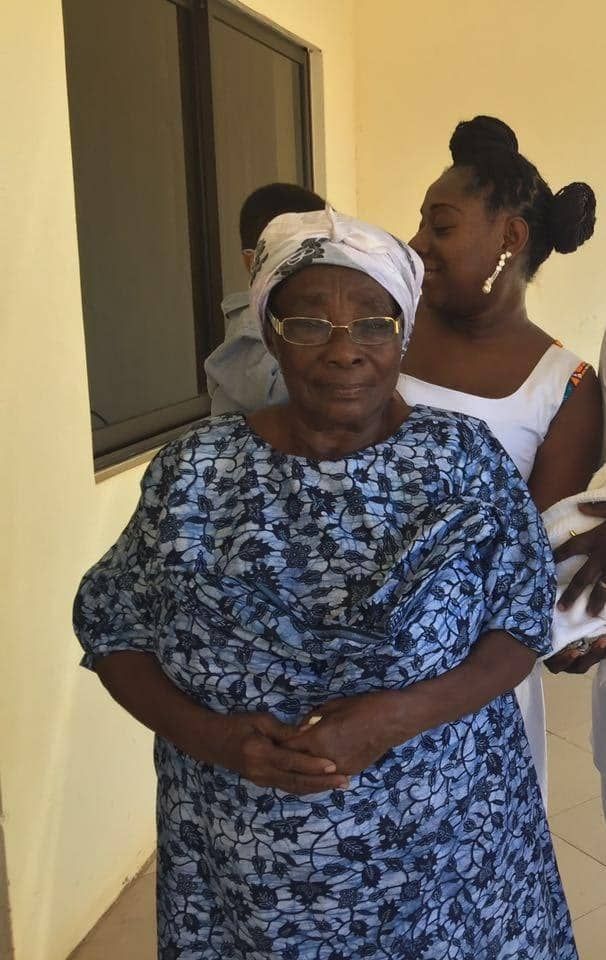
    Then came my grandmother on 15th August 2014, bringing strength, care, and wisdom at 82!

    A Blessing Arrives

    She had been living with my aunt in Takoradi, but when she heard about my upcoming delivery, she insisted on coming to stay with me. We picked her up at the bus station in the afternoon, and that moment marked the beginning of one of the most defining chapters of my life.

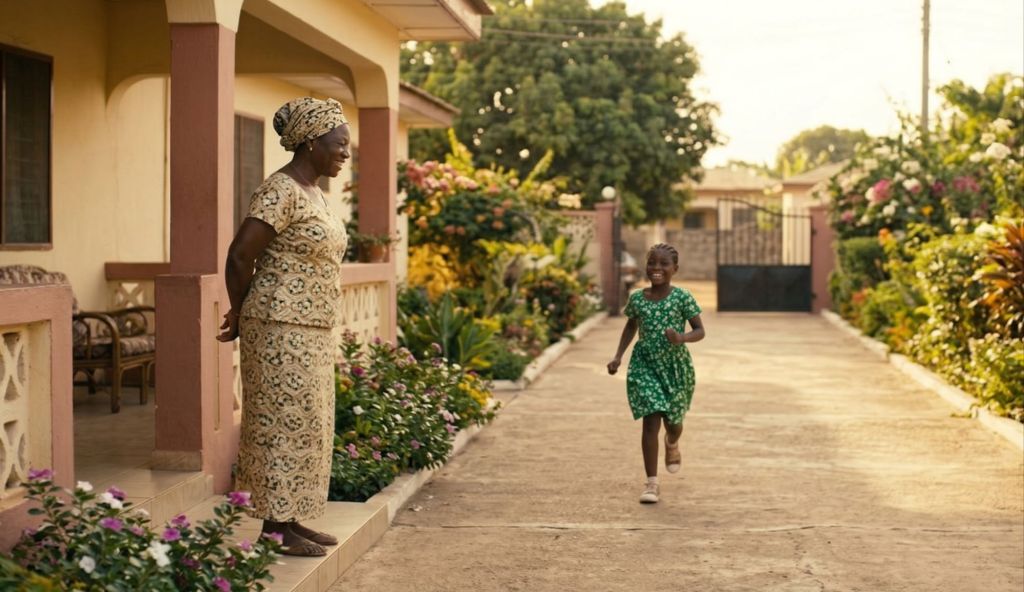
    In many Ghanaian homes, when a woman gives birth, it’s usually an older woman, often the mother or grandmother who steps in to care for the new mother and baby. My grandmother came ready to do just that.

    Despite being 82 at that time, she moved with the energy of someone in her fifties. She walked briskly, washed, cleaned, sang hymns, and filled our home with her quiet strength. She was the kind of woman whose presence softened even the hardest days.

    Finding Rhythm in the Chaos

    The first few months went smoothly. My mother’s check-ins, my husband’s home visits, and the help of a young relative made things manageable.But after four months( maternity leave in Ghana is only 12 weeks!) right when I had returned to work after maternity leave , my house help told us she was leaving. I was devastated. How was I supposed to cope with a newborn, a demanding job, and an elderly grandmother? My mother couldn’t come often because of her new posting, and my husband was still in Takoradi. Suddenly, it was just me, my grandmother, and the 4 month old baby.

    As Head of HR and Administration at a telecom firm, my days were long. That night, tears streaming, I wondered how I’d cope. My grandmother, calm and wise, reassured me: “Don’t worry. You are a new mother. If you let this stress consume you, it will affect the baby. We will find a way.

    And she did!

    Together, we came up with a plan. Every morning, after she had washed and bathed the baby and herself, she would have breakfast ready before I woke up. I’d pump milk, eat, and then drop her and the baby off at my father’s house nearby so she could have help if needed. At the end of the workday, I’d pick them up. That simple plan became our rhythm, our lifeline.

    Healing in the Quiet Moments

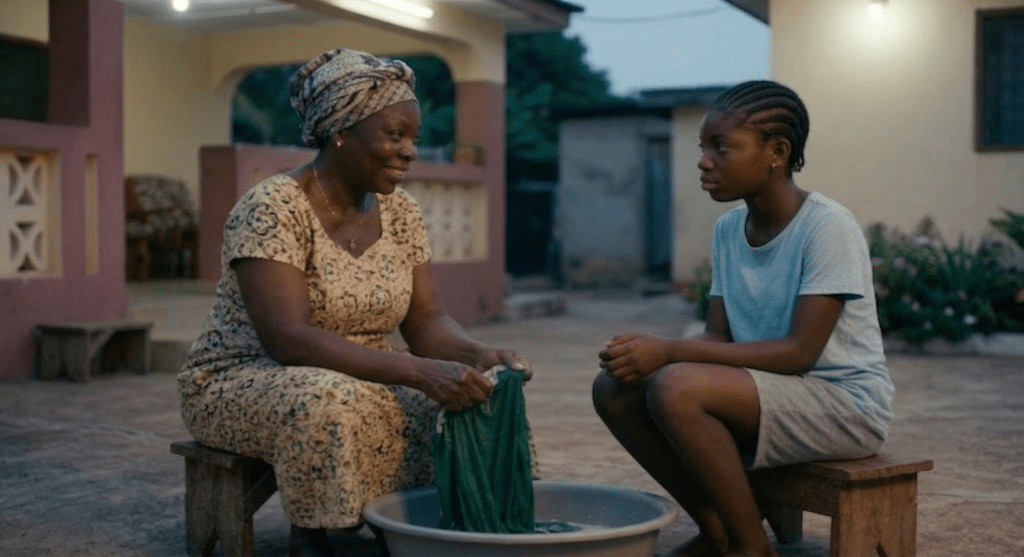
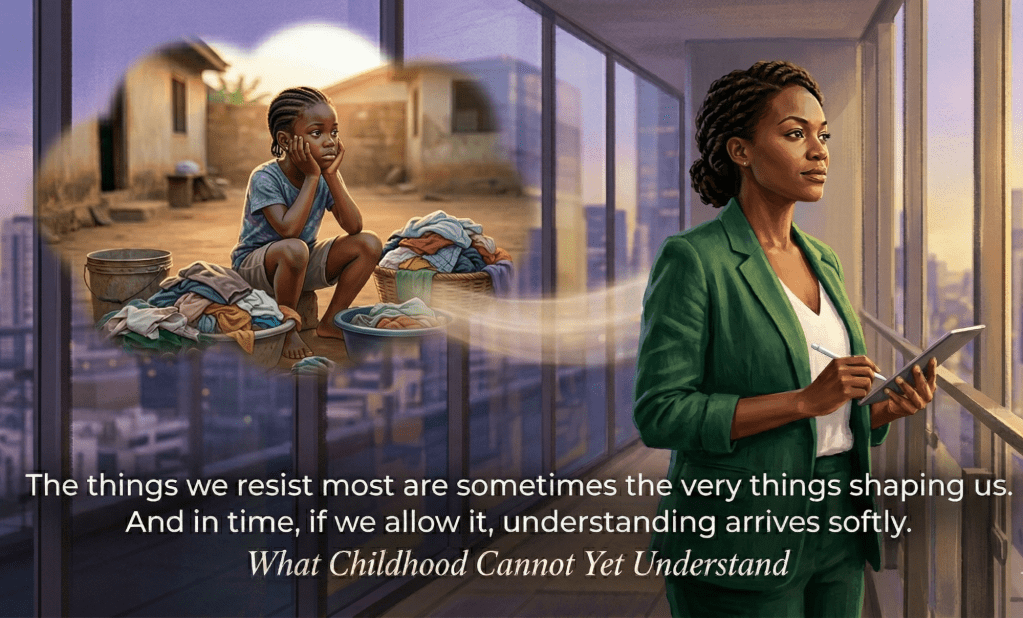
    My grandmother had a remarkable way of creating order out of chaos. Every day, she woke at 4 a.m., bathed herself and the baby, washed his clothes by hand (she didn’t trust the washing machine, “the water doesn’t flow well, it might breed bacteria”), and cooked porridge for me before I even opened my eyes.

    By the time I got up, everything was ready. The baby was bathed, bottles sterilized, and breakfast waiting. I’d pump milk, eat, drop them off, and rush to work. In the evenings, we’d have supper, she’d help me breastfeed, and then bathe the baby while I pumped before bedtime.

    At first, the baby slept in my room, but soon she realized I was too exhausted to hear him cry. She would quietly pick him up, soothe him, guide him to latch, and return him to bed so I could rest.

    After a week, she said, “This isn’t good for you. You need uninterrupted sleep. I’ll make space for you in my room.” That Sunday, after dropping my husband at the bus station, she sat me down: “I am worried about you, your health, your mind, your marriage. You need rest. Let’s do things differently.”

    She set up a bed beside hers. When the baby woke, she guided him to feed and let me drift back to sleep. For the first time in weeks, I rested properly.

    The Grace That Kept Me From Falling Apart

    Our evenings became sacred. I’d come home from work, bathe, feed the baby, eat, and then we’d sit together, sometimes watching TV, other times just talking. She’d ask about my day and, when she sensed I was fading, she’d say, “Let’s go to bed.”

    She loved to read, Shakespeare, Dickens, Achebe, softly until I fell asleep. Some nights, when my spirit was low, she’d say, “No reading tonight. Let’s sing,” and we’d sing hymns, her voice steady and soothing.

    There was such peace in those moments, a kind of unspoken therapy.

    She ironed my clothes in the mornings before I woke and kept track of which breast the baby had fed on the night before. Every detail of my life was touched by her care.

    Some Wednesdays, my mother would visit with food and laughter, and on weekends my husband would come. But during the week, it was just us, me, my baby, and my grandmother, my trinity of love and survival.

    Lessons Etched in Love and Everyday Acts

    Looking back, I see how deeply my grandmother protected me, not just from the exhaustion of new motherhood, but from the edges of depression and burnout. A friend struggled with postpartum depression, but I didn’t, because she created a space where I felt seen, cared for, and never alone.

    Her care was gentle, consistent, and sacred. She never lectured on strength; she showed it quietly, waking at dawn, making sure I ate, and praying over me and the baby each night. At 82, she cared for a newborn, an exhausted mother, and a household, all with joy.

    Even after we hired help, our routine stayed the same. I slept in her room; she read to me, sang hymns, and started each day calmly. She lived with me for over seven years, through both my children’s births.

    Those years shaped me. Caregiving is not weakness but a quiet form of power. Love is a discipline, practiced in small, deliberate acts. Mental health isn’t only therapy or medication; it’s also who holds you when you’re falling apart.

    Being a mother doesn’t mean doing it alone. It means accepting help, honoring rest, and creating a circle of care. Aging doesn’t diminish purpose; my grandmother’s strength was in her steady presence and in seeing what needed to be done without complaint.

    Why Every Woman Needs a Circle of Care

    Thinking about today’s conversations on mental health and women’s wellbeing, I see how far we’ve come, but also how far we still have to go. Many women navigate motherhood alone, pressured to “bounce back” while silently battling exhaustion, anxiety, and guilt. Yet in many African homes, grandmothers, aunties, and sisters form invisible safety nets, quietly holding families together.

    We need to honor them, talk about them, and build systems at work, in policy, and in our communities that value care as much as productivity. Because care saves lives.

    My grandmother had no psychology degree and didn’t know the term “mental health awareness,” but she understood wellbeing and embodied it. That, to me, is what October should remind us — awareness isn’t just campaigns and ribbons, but the people who make healing real in our daily lives.

    She Taught Me That Strength Can Be Soft

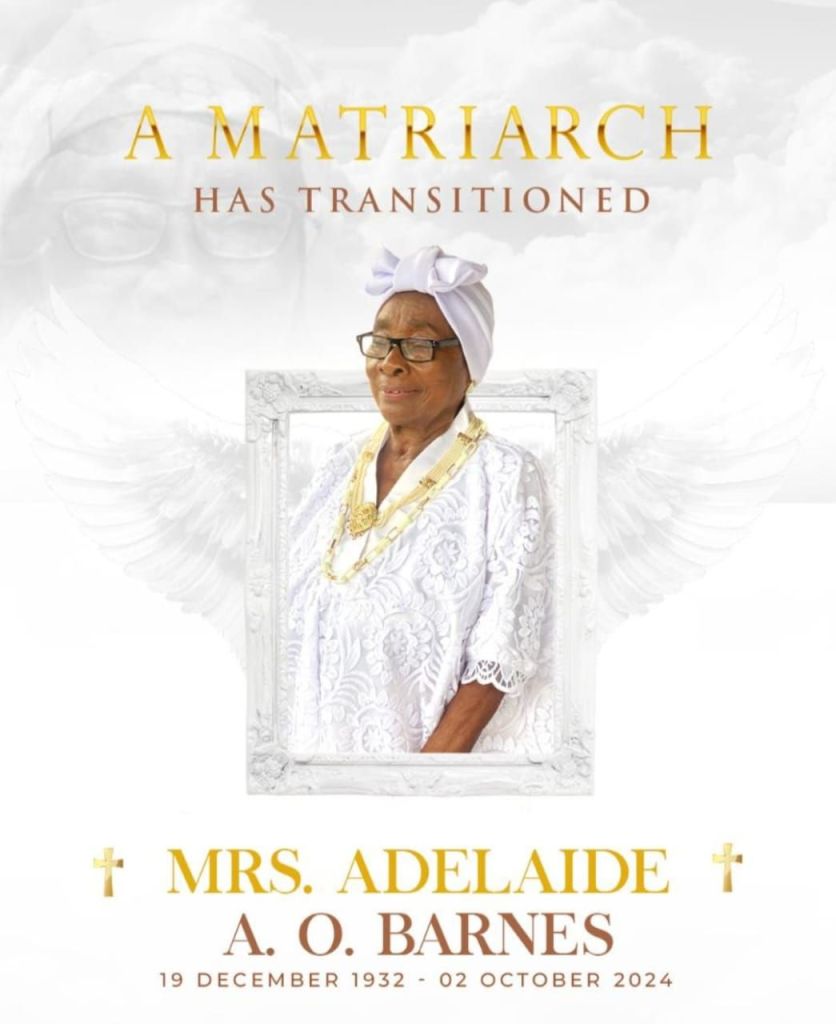
    My grandmother passed away on 3rd October 2024 , but her lessons live in everything I do. I see her in how I mother my own children, in how I listen when a friend is overwhelmed, in how I try to balance ambition with rest.

    She taught me that strength is not noise. Strength can be found in the gentle hand that rocks a baby, in the quiet morning prayers, in the unspoken acts of love that hold families together.

    She showed me that we are never too old to serve, never too busy to care, and never too far gone to nurture someone else’s light.

    Who Held You When You Needed Holding?

    As we mark Breast Cancer Awareness and Mental Health Month, I reflect on the women who hold us when life feels too heavy.

    For me, it was my grandmother. She carried me when I couldn’t carry myself, helping me find my strength again.

    Who held you when you needed holding? Who was your quiet source of grace, your reminder you weren’t alone?

    Let’s celebrate them. These are the women, often unseen, often unspoken, who shape the best parts of us.

    Your support keeps me writing! If you loved this post, please **like** the page now and leave a comment

    Want more great content? Join the community and **subscribe** to the blog! 🤝

  • Have you ever pulled off a scheme so perfectly brilliant that the punishment turned into the funniest family story?

    My grandmother, Adjoa Okorewaa, was the kind of woman whose love for learning had no expiry date. Even at ninety-two, she would read, write, and study with a level of focus that could humble anyone. She believed that learning was a lifelong process and that every day was an opportunity to sharpen the mind, no matter how old you were. But even the wisest lifelong learner can be outsmarted… especially before 5:00 AM.

    Read on to find out how two determined children in Accra pulled off the ultimate bedtime switcheroo—and what that hilarious morning really taught us about learning, laughter, and family love

    …………………

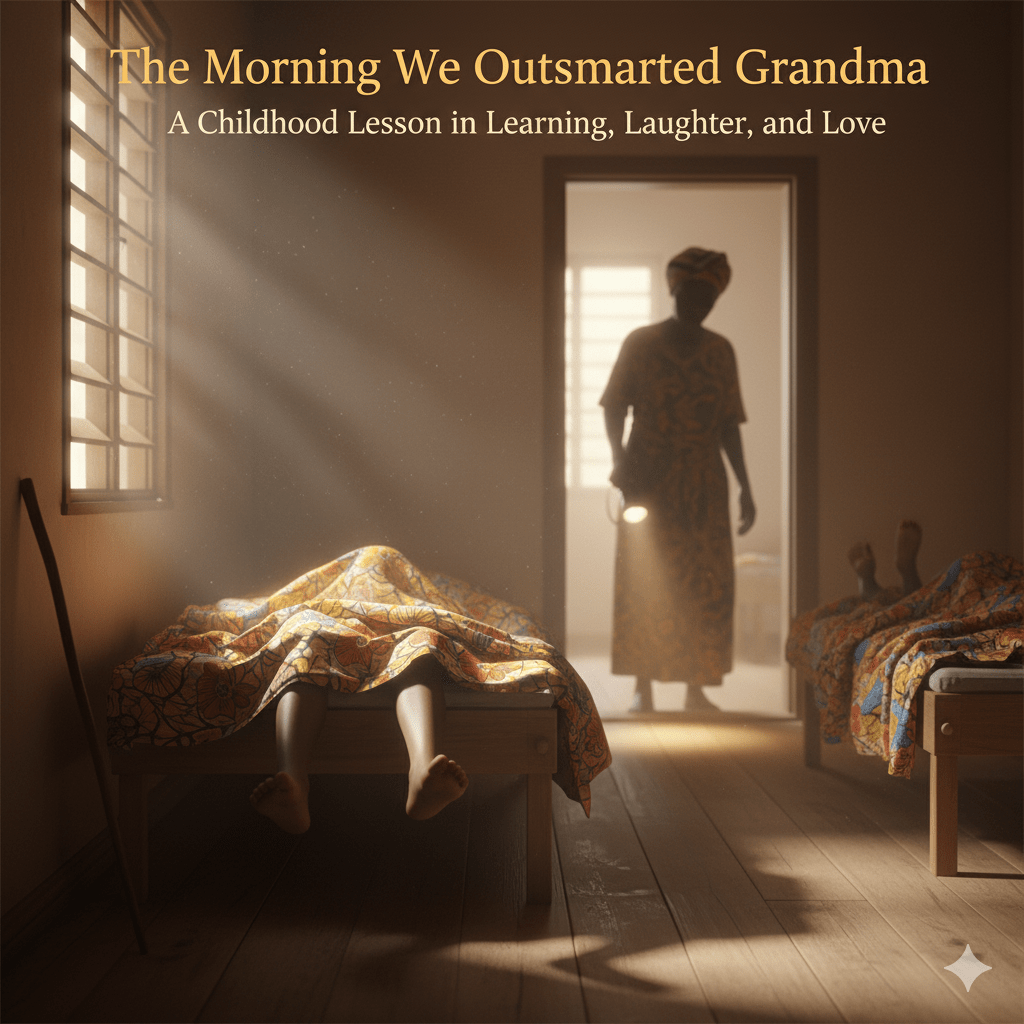
    As a teacher, she had a firm philosophy: “The best time to learn is early in the morning, when your brain is fresh and most receptive.” And she lived by it. Whenever we, her grandchildren, were in her care, our mornings began long before the sun came up. At around 4:30 or 5:00 a.m., she would come into the room with her small torchlight, wake us gently but firmly, and say, “It’s time to learn.”

    She would already have prepared her notes and lessons for the morning — grammar, reading, mathematics, science, and general knowledge quizzes. Lesson lasted about an hour and half. And though we grew up to appreciate that routine, as children, we dreaded it. We wanted to sleep in, to dream a little longer, not to wake up to dictation and arithmetic.

    ……………….

    I remember one long vacation vividly. My cousins had come from Takoradi to stay with us in Abelenkpe, Accra. Grandma, also on school break, decided we should not waste the vacation doing nothing. So she turned our home into a mini boarding school: early morning lessons and afternoons  spent on life skills and crafts such as basket weaving, needlework, and gardening. She believed idleness was the enemy of a young mind.

    At that time, my sister was eleven, I was  10, and my younger brother and nephew were around five. They were too young to join our lessons at 5 am, so my parents had agreed that Grandma could wake them at six or seven  am — but we older ones had to rise at five. To us, it felt unfair.

    We had tried complaining, but Grandma was resolute. The dawn before this story happened, she had caught us hiding in another room when she came to wake us, and she had spanked us lightly with her cane. It was the African way — “spare the rod and spoil the child,” as she’d always say.

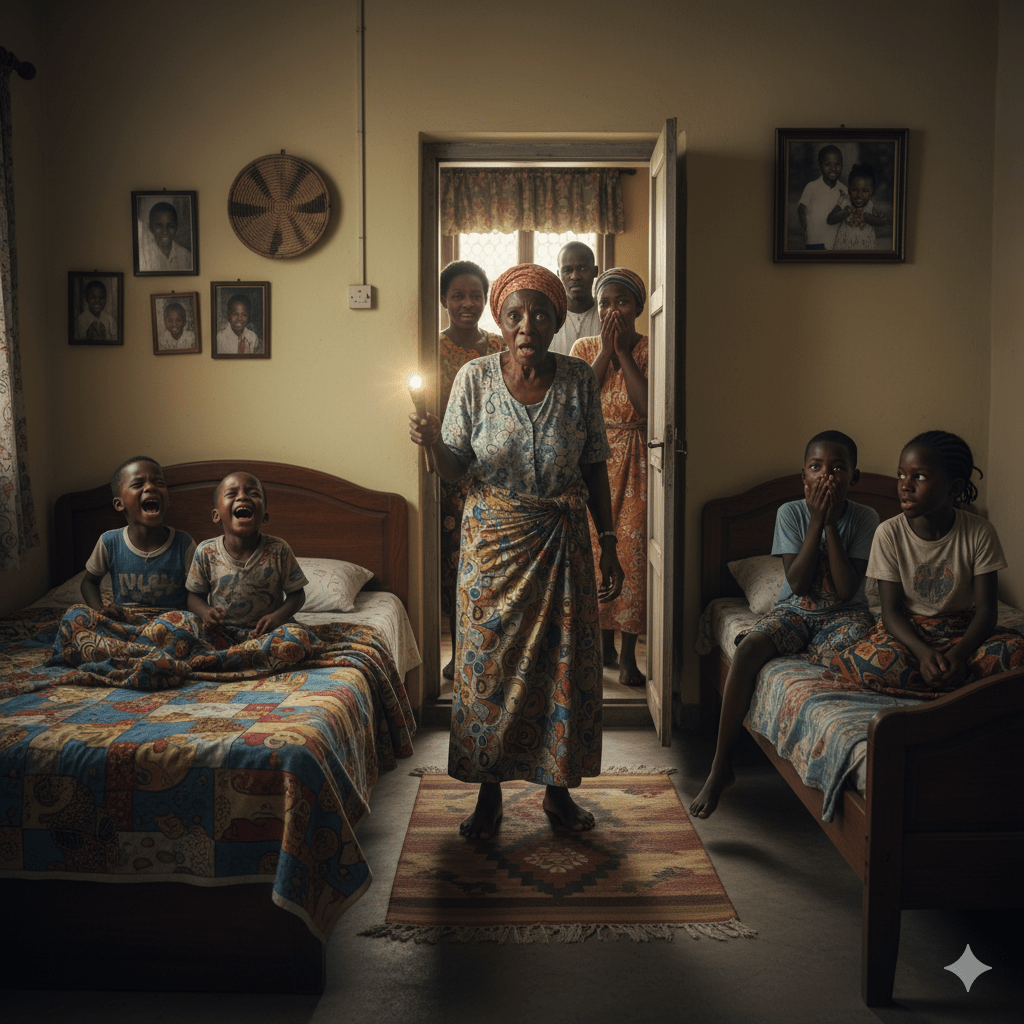
    So that night, my sister and I decided we’d had enough. We whispered under the covers, plotting our “brilliant” escape. In our large room, there were two beds: on the left, my sister and I slept; on the right, the two younger ones. Grandma always came straight to our bed with her torch light when she entered the room because she didn’t want to disturb the little ones by turning on the light. So our plan was simple …. we would swap beds!

    When everyone was asleep, we tiptoed across the room, gently lifted the younger ones onto our bed, covered them nicely with our cloths, and then crawled into their bed, trying not to giggle. It felt like the perfect plan. We fell asleep feeling victorious.

    At exactly 5:00 a.m., the familiar sound of Grandma’s slippers shuffled down the corridor. She came into the room, nudged the “older” bed, and said softly, “Wake up, time to learn.” Silence. She waited. We held our breath. Then, thinking we were pretending to sleep, she gave one sharp tap with her cane on the wrong bed.

    The next thing we heard, was piercing screams. My little brother and nephew were crying uncontrollably, startled out of their sleep. Grandma froze, the cane in her hand. Within seconds, the whole house was awake. My parents rushed in, the house helps came running, and my sister and I sat up, wide-eyed and speechless.

    The scene was chaos: the little ones wailing, Grandma scolding us whilst stifling a laugh, my parents half-angry and half-bewildered. My mother scolded Grandma for not checking before caning, and then turned to us, saying, “You two are too cunning for your own good!”

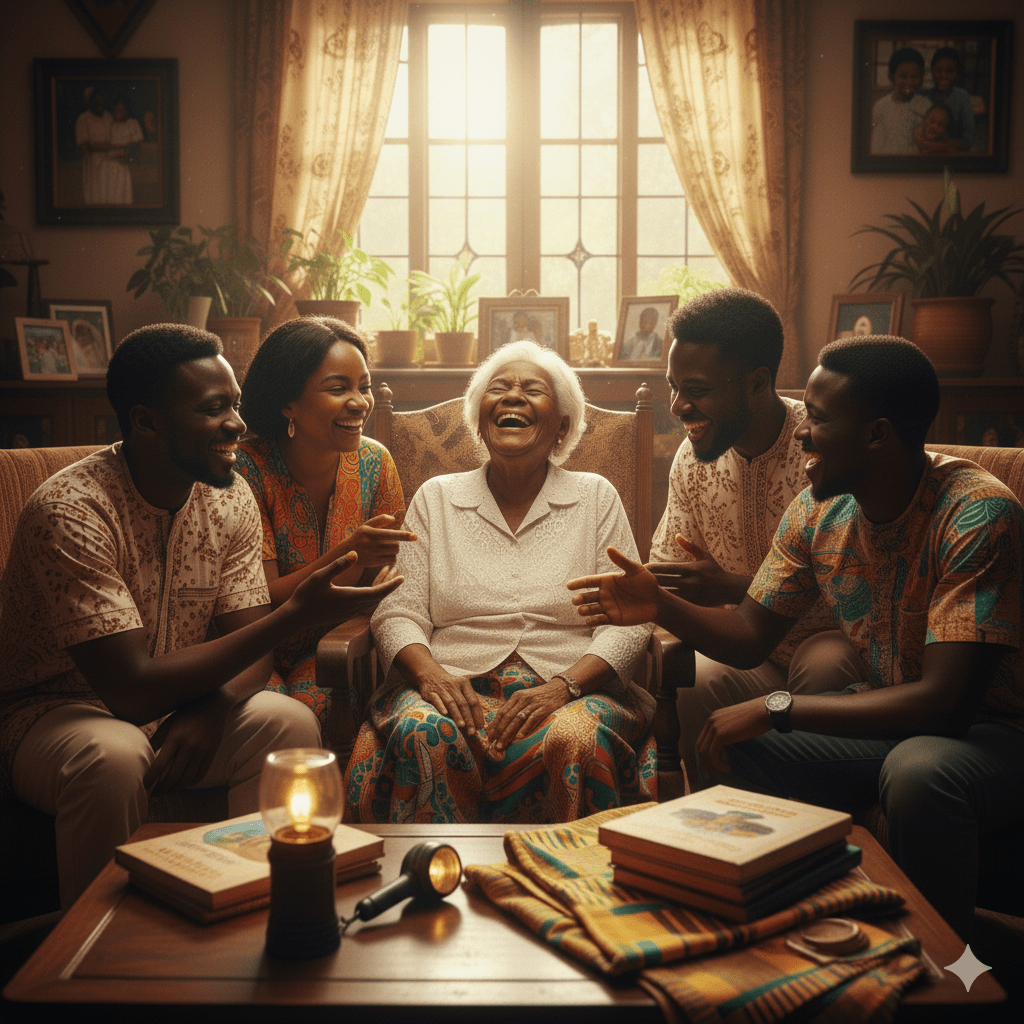
    The housekeepers couldn’t contain their laughter. Even Grandma, shaking her head, finally burst into tears of laughter. Between her laughter and tears, she said, “You’ve really outdone me this time. You used your brains well, just in the wrong way!”

    ……………………..

    That morning, there were no lessons. Grandma was laughing too hard to teach. She said, “You know what, I’ve had it with you this morning. I can’t teach children who think like strategists. You’re all too clever for me!” We thought we were in deep trouble, but instead, it turned into one of the funniest, most memorable mornings of our childhood.

    Later that day, as a light punishment, she cancelled our crocheting and needlework activities, saying we needed to “reflect on our mischief.” But even then, her warmth wrapped around us. She could always find love and laughter in any situation, no matter how frustrating.

    Years later, every time someone brought up that story, Grandma would laugh until tears filled her eyes. “I remember when you made me cane the wrong children,” she’d say, “Oh, you people were so cunning!” That laughter became part of her legacy. The way she turned mistakes into memories and mischief into moments of teaching.

    ………………….

    Looking back, I now see that morning differently. It wasn’t just about outsmarting Grandma. It was about creativity, problem-solving, and the way she encouraged us , even unintentionally, to think for ourselves. Beneath her discipline was a deep love for learning and a belief that the mind should never be idle.

    Grandma’s philosophy was simple but profound:

    • Start your day with purpose.
    • Always make time to learn.
    • Apply your mind to the problem; every chaotic moment holds a nugget of insight.
    • And above all, treat every mistake as an opportunity to grow.

    She taught through action, through laughter, and through love. And though she’s no longer with us, her voice still echoes every morning when I rise early to read, write, or learn something new.

    I often smile and think, “Grandma was right.The morning really is when the mind is sharpest.”

    ……………….

    💬 What about you?

    What’s the one piece of wisdom from a grandparent that changed your life? Tell us in the comments! — I’d love to read your memories, too.

  • In my generation, childhood wasn’t just a period of growth; it was a time of deliberate shaping. The goal of nurturing was to shape children into self-sufficient, morally upright, and useful citizens. Success, in this sense, was measured not only by career milestones or household income, but by the ability to raise responsible citizens, cultivate strong and compassionate family leaders, and nurture individuals who extend care and kindness beyond their immediate family to the wider community.

    Creativity and self-reliance were the norms. From an early age, each child was encouraged to cultivate hands-on skills, strengthen practical abilities, and take responsibility in contributing to the care and work of the household. Families lived off what they grew on their farms, and even in the cities, backyard gardens were a standard feature. This lifestyle made life less expensive and more inclusive; large households could thrive, and extended family members could be cared for, because everyone played a role in sustaining the home.

    For my grandmother, nearly 80% of her household’s food and essentials came directly from her farms. With no fewer than fifteen household members at any given time, this was a remarkable feat. Each day involved a carefully orchestrated rhythm of planting, tending, harvesting, cooking, and maintaining the home. Children and adults alike had clearly defined roles, from feeding livestock to preserving food, ensuring that everyone contributed to the household’s well-being. It was a system that combined ingenuity, discipline, and cooperation—one that not only met material needs but also reinforced a deep sense of responsibility, community, and shared purpose.

    The Farm as a Living Classroom

    Her farms were a living classroom, where nothing grew without purpose. Each crop carried layers of value, offering food, tools, and lessons in ingenuity. The palm fruit trees, for example, produced oil that sizzled in cooking pots, while their leaves were stripped and woven into brooms and sturdy baskets that stored harvests or used to fish from the river. Everywhere, the land taught us creativity and self-reliance.

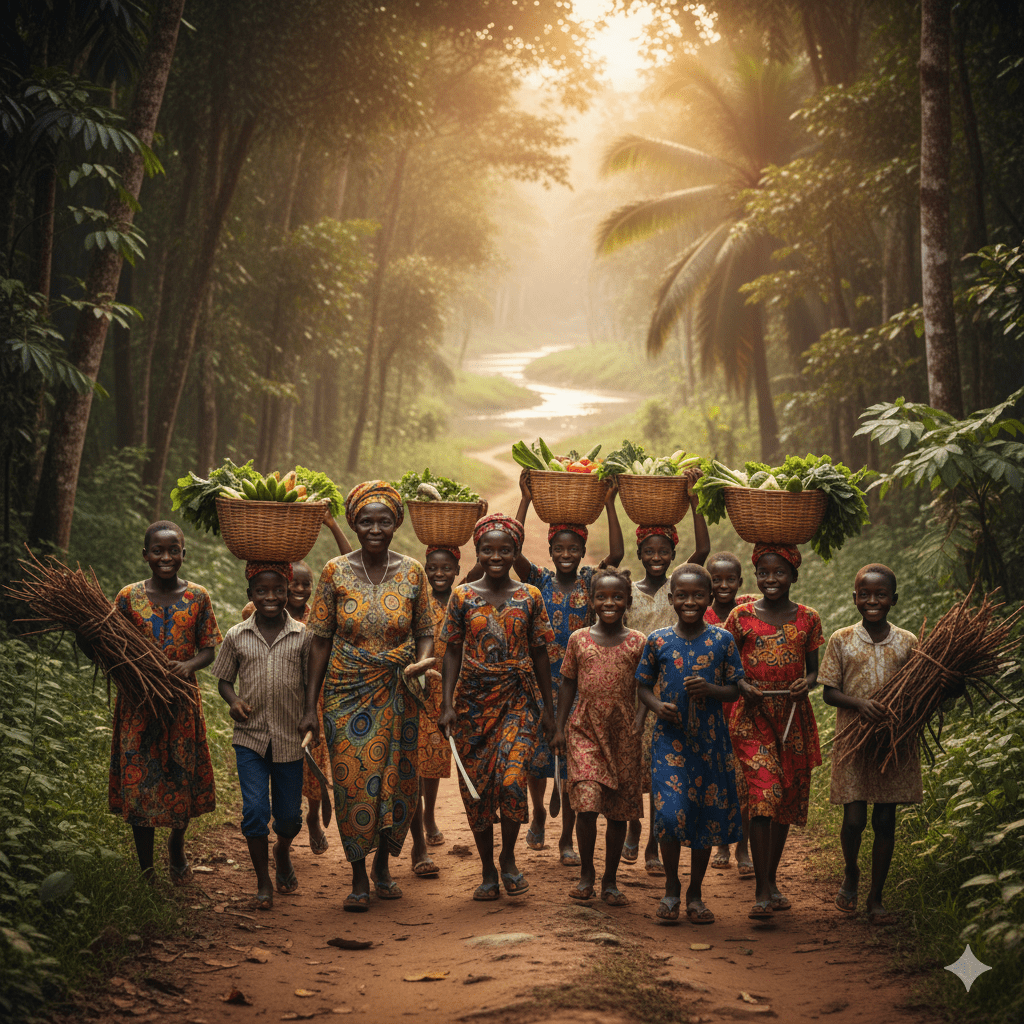
    Each day began with a walk to the farms—30 to 45 minutes along narrow paths, tools resting on our shoulders. Fifteen to twenty of us moved together in a line, our laughter and songs drifting lightly across the fields. The rhythm of our steps, the chatter, and the occasional clink of metal against wood made the journey feel less like a chore and more like a ritual. The excitement of discovering snails, mushrooms, and other small gifts from nature along the forested paths added a sense of wonder, turning the walk into an adventure and a chance to connect with the land around us.

    To ensure a steady supply, my grandmother grew a wide variety of fruits and vegetables and raised livestock. Goats and sheep were led to graze in the afternoons, while fowls roamed freely but always laid their eggs in familiar spots. With farms spread across four locations, household members were split into teams to bring food home daily. My favourite was the one near River Ayensu. We had to cross the bridge and walk right along the river bank to get to the farm . There was always something to see. Another was called “Agyei”. We used to cook delicious meals right in the farm.

    Weekend Rhythms

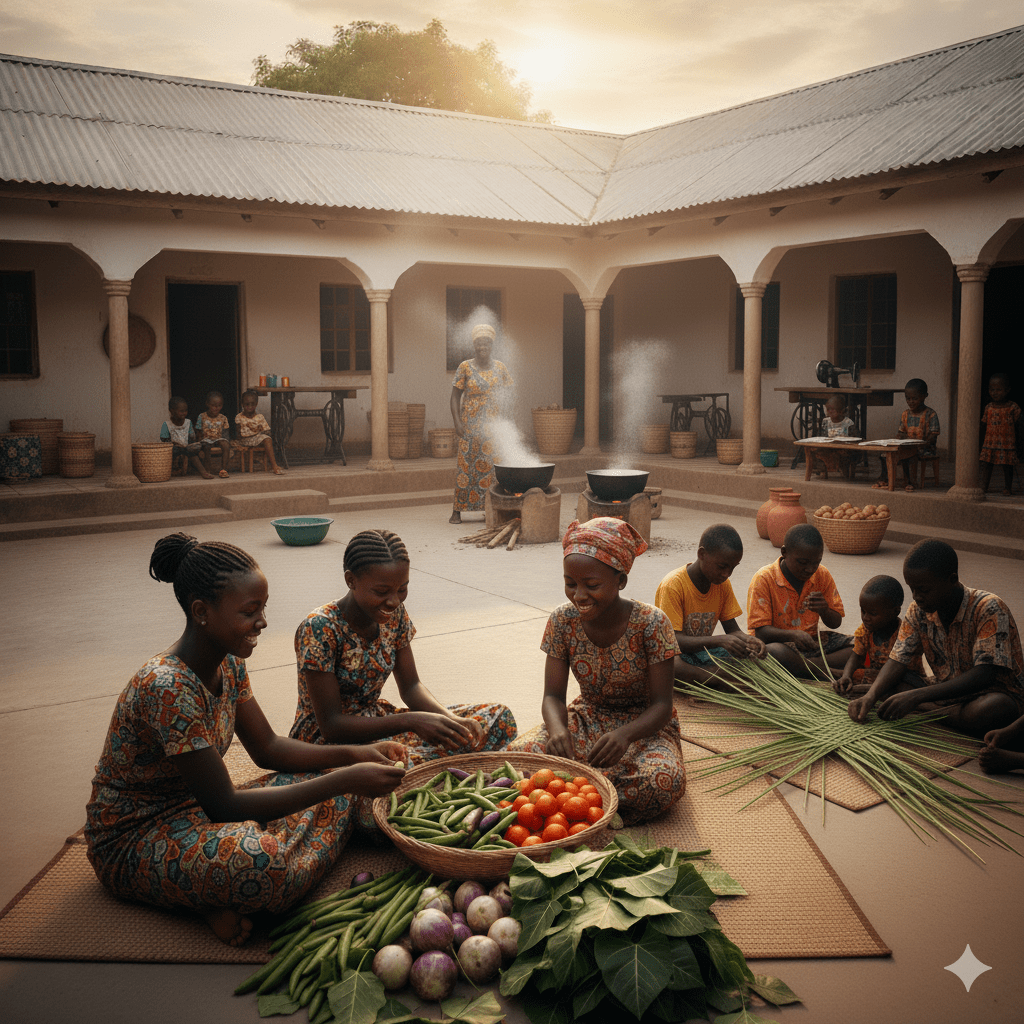
    Weekends had their own rhythm. Saturdays began at 6 a.m., with everyone on the farms, and by 11 we returned home to process the harvest. Groups gathered in circles—some weaving brooms, others shaping baskets, or shelling dried corn. Even firewood and clay for pots came from the land, reinforcing the lesson that nature provided everything we needed if we worked for it.

    Sundays, by contrast, were a day of rest. There was no farming; the entire household went to church, then returned home for a quiet siesta and preparations for the week ahead.

    Lessons in Resilience and Generosity

    The most immersive learning came during the two years I lived with her continuously. Even after my teenage years, during university breaks, I returned to her home. The rhythm never changed even in my adult years: morning service at the Presbyterian Church, study sessions, and long walks to the farm. She gathered herbs for teas and remedies, distributed surplus food to the less privileged, and taught us that generosity was as vital as survival. I remember days when I was tasked with delivering meals to a blind woman nearby and to an elderly man afflicted by a stroke. Other members of the household had their own assigned tasks, and we carried them out with joy, knowing that eager hands awaited the gifts we brought.

    This disciplined yet nurturing environment became the bedrock of my resilience.Years later, after a traumatic burglary and the weight of adult responsibilities left me struggling with anxiety, I found solace and unexpected healing in gardening—a return, in many ways, to the rhythms of the land I had known as a child. Without hesitation, I began planting peppers, okra, lettuce, garden eggs, tomatoes, ginger, and other vegetables, alongside a variety of herbs and spices, filling my garden with life, color, and the promise of nourishing meals. I instinctively knew how to tend them—spacing, watering, sunlight—because the knowledge was already in me. What I had once thought of as chores had become life-saving skills.

    A Philosophy of Life

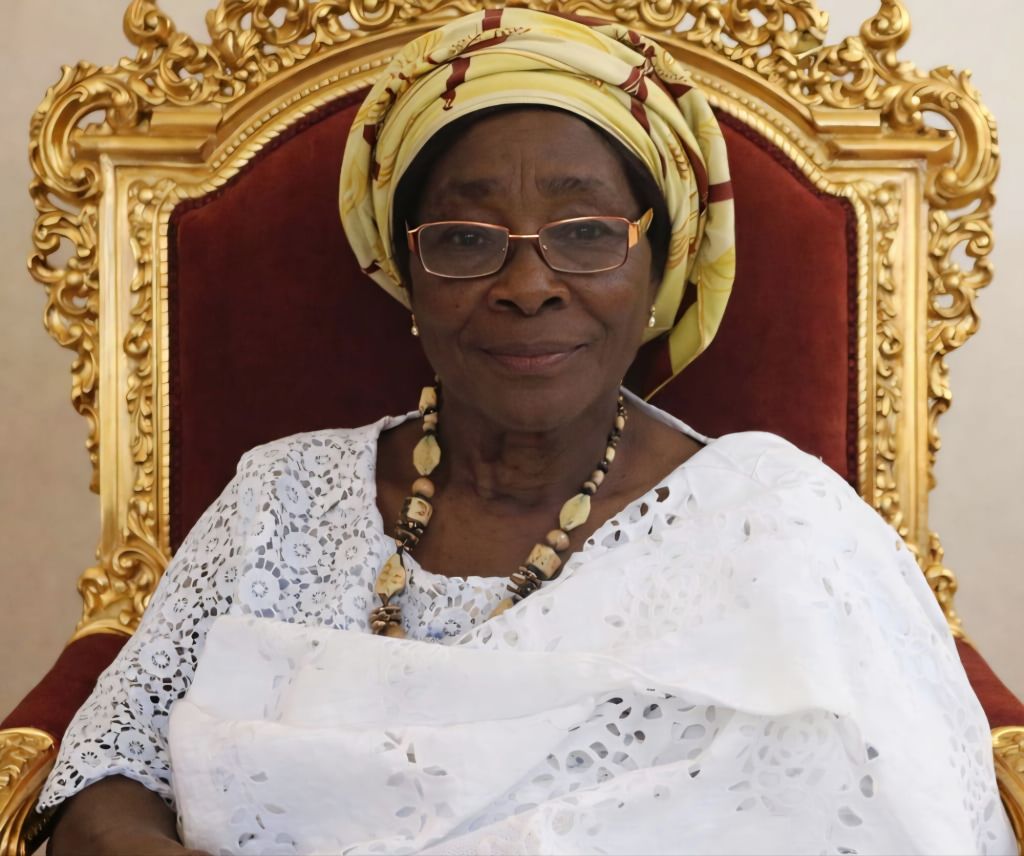
    My grandmother was a creator, a problem-solver, and a tireless believer in being fruitful. With her modest teacher’s salary, she managed to feed and educate a large household, not by money alone, but by harnessing skills, resourcefulness, and nature’s abundance. Everyone who passed through her home left equipped with survival tools and the confidence to provide for themselves. Today, we call this sustainability—but for her, it was simply life. Even at 91, she still sat quietly sewing with a simple needle and thread whenever textiles needed mending or alteration, her enduring spirit woven into every stitch.

    The scent of damp earth and blooming plants still brings me back to her farms. They weren’t just fields of crops—they were sanctuaries where patience, resilience, and gratitude took root. “It’s a good thing to be able to do things for yourself,” she used to say. “It keeps you strong and free.” These words echo in my life. Her lessons remind me that true freedom comes from self-reliance, true beauty comes through patience, and true joy is found in gratitude.

    It has recently dawned on me that I am unconsciously drawn to words like “organic,” “seed,” “harvest,” “nurturing,” “fruitfulness,” and “growth free from manipulation or deception.” I now realize that this inclination reflects my grandmother’s life philosophy—lessons learned not through lectures, but through the steady rhythm of her farms and the way she cultivated both land and people.

    Looking back, I see her farms as a reflection of her life: deliberate, patient, abundant, and deeply rooted in values that endure. She showed me that the most rewarding outcomes are not forced—they are grown. Her quiet strength, resilience, and generosity continue to shape me today, a living tribute to the woman who taught me not just how to grow food, but how to grow in life.

    Adelaide Adwoa Okorewaa Barnes (née Anaman)

                                 …………….

    I found unexpected healing in gardening by returning to the rhythms of the land. Have you ever returned to a childhood activity or lesson to find peace or healing as an adult? Let me know in the comments.

                                  ……………..

    Your likes, comments, and shares truly motivate me to keep writing. If you enjoyed this story, please consider giving it a like! And if you’d like to read more, I’d love for you to subscribe to my blog

  • My Beloved Grandma,


    A year has passed, yet the void you left has never shrunk; it has lived with us, breathing into each day. Exactly a year ago, you took your bow from this stage of life, but your work, your labour of love, has blossomed into fruit, and I stand as a living testament.


    My teacher. My sage. My scribe. My oracle of wisdom. You are missed. You are gone, but you are not forgotten. You live on in every line I write, in every word I speak, in every principle I hold dear.

    You taught me the power and mystery of language, the English you so beautifully mastered, the patience to read, the courage to comprehend, and the discipline to write. Yours was a life not just devoted to teaching but to forming souls. You taught not only your own but countless others, passing through classroom walls as though they were porous.

    I remember your training as if it were yesterday. You would rise before dawn, wake me gently, and hand me a passage to read, calling the exercise “Writer’s Magic.” A plain sheet, one minute, write down everything the passage stirred in my mind. “Recite your alphabets first,” you would insist. “It keeps your writing lyrical and your mind unblocked.” And it did. You shaped my mind like a sculptor, chiseling with prose, poetry, drama, scripture, Kennedy’s speeches, and Nkrumah’s oratory.

    You told me of Grandpa, the masterstroke behind some of Nkrumah’s most powerful speeches, a craftsmanship so profound it carried the family to Zanzibar in the 1960s. You reminded me that words could move nations, and you urged me to read everything, to build an arsenal of words.

    You placed before us rare books that few children my age had ever seen, works by African writers such as Chinua Achebe’s Things Fall Apart, Ngũgĩ wa Thiong’o’s Decolonising the Mind, and Wole Soyinka’s The Man Died. You gave us the works of great historians like Cheikh Anta Diop, Basil Davidson, Prof. Albert Adu Boahen, and Carl Christian Reindorf. You wanted us to know not just the world’s literature, but also the depth of our own heritage, to see history, politics, and prophecy through African eyes. You taught me to write with the voice of God and to preserve memory with the grace of ten thousand dawns, even as you yourself were simply “a teacher.”

    A selfless teacher. A primary school teacher. Yet in your hands, the ordinary became extraordinary.

    You were never a political fanatic. You said politics was too noisy for your liking. But you believed the truest form of politics was service. Serve your people quietly, humbly, in the small ways that build big lives. And you did.

    I think of you when I see the River Ayensu in the news, the river of your folklore, the river whose banks you led us to as children. It was once clear and springlike. Today it runs brown like the hot chocolate you loved in the mornings. Galamsey has poisoned it. Kwanyako, the community where you taught for over three decades and where I first sat in preschool, now lies dry. The waterworks have shut down. You would weep, Grandma. You would ask the ancestors to intercede. And you would remind me, with that gentle laugh of yours, that the gods act in their own time.

    I write about it now, as you taught me. I write so that no one forgets what greed does to ordinary people. So today, I show you to my readers, to my audience, to my critics, the ones you called “necessary ingredients for growth.” I show them the hand behind my craft.

    You said I was a city on a hill and could not be hidden. You said privilege and duty must be my mantra. Your motto, Semper Cum Optimis (“Always with the best”), is now engraved into my soul. You taught me that everyone is a teacher, unconsciously shaping the minds of others, and that we will one day account for what we taught. You dared me to write for change, and those were your last conversations with me before you slipped away.

    Today, the hand you formed writes for the people, for the truth, for the country. You live in my words, which is why I am careful, factual not sensational, courageous not reckless. You live in my conduct, which is why I strive for emotional intelligence. The gangster is dormant now, only the servant prince thrives.

    I am becoming a better version of myself every day, Grandma. Because of you. Because you planted something deep.

    Thank you Auntie. Thank you Mrs. Barnes. Thank you my beloved grandmother.
    Sleep well. God bless you.

    Da Yie, Mrs. Dee, Da Yie.

    Kay Codjoe

    (https://www.facebook.com/share/17e72Yu3mr/)

  • Beneath the quiet of the heavens, my grandmother rests,
    The towering odum has fallen—its majesty still lingers.
    Deep roots entwined with earth’s history,
    Her branches stretch across realms, offering solace in the unknown.

    My grandmother lies down to sleep,
    A celestial being has returned home.
    Her life was a hymn of peace and harmony,
    Her gentle voice a psalm of grace,
    Her heart, a vessel of unblemished truth.

    My grandmother lies down to sleep,
    A pillar of unwavering strength and dignity.
    Her movements carried the rhythm of elegance,
    Her presence, a testament to resilience.
    Now, an angel she becomes, ascending to the eternal.

    My grandmother lies down to sleep,
    The candle flickers—a tender rebellion against the night—
    Each flutter a memory, a life well-lived.
    And when it surrenders to the dark,
    It leaves behind a glow we hold in our hearts.

    My grandmother lies down to sleep,
    Her face adorned with the serenity of hymns unspoken.
    In her repose, she finds home.
    The cries of the living echo faintly,
    While the wind carries whispers of her laughter,
    A song of peace resonating across the ages.

    My grandmother lies down to sleep,
    The great partridge, bold and enduring, has taken flight.
    In the night’s vast expanse, a star ascends,
    Brilliant, steadfast—a beacon of her spirit.
    The joy of her angelic ascent,
    The ache of her earthly absence.

    My grandmother lies down to sleep,
    A shadow cast upon our hearts,
    Yet her light endures within our lives.
    She is the roots that anchor us,
    The wisdom that guides us,
    Our intercessor, our eternal star.

    My grandmother lies down to sleep.

  • AI-generated image.

    Some stories are more than just memories; they are testaments to a legacy that shapes who we are. Lately, I’ve found myself reflecting on my family’s journey, especially on the resilience, hope, and unwavering belief in people that defined them. It’s a powerful legacy, and today, I want to share a story that is at the very heart of it all.

    My grandmother came from a truly remarkable lineage. My family from the maternal side came from a line of both Christian missionaries and royalty. My great-great-grandparents and great-grandparents were all dedicated missionaries under the Presbyterian Church. They believed fiercely in the power of faith and learning, ensuring that their own children were educated to the highest level possible and rooted in Godly nurturing. This spiritual and academic foundation was a core part of my grandmother’s identity. She herself was a woman ahead of her time, highly educated, and she spoke so fondly of her time at a German girls’ institution. This gave her a uniquely strict and philosophical view on learning that fueled her burning desire to see others, especially women, excel.

    For the last 30 years of her working life—she retired at 70, with the last five as a volunteer without remuneration—my grandmother was a teacher at the Presbyterian school in Agona Kwanyako, located within the missionaries’ quarters known as Salem. For her, teaching was a calling, a way to combine education with a higher purpose and “imbibe the God factor” within her community.
                                  ———-

    A Home for All

    My grandmother’s home was more than just a place to live; it was a living, breathing hub of activity, a large traditional compound with a central courtyard and rooms that were always full. At the heart of it all was my grandmother, the unquestioned “boss lady,” a true force of nature who made the incredible chaos of over 20 children feel like a harmonious family. Her world was one of nurturing and learning, driven by a sacred duty to ensure every single one of them had a chance at life—especially those who were either school dropouts or had never even stepped into a classroom.

    She had two distinct paths to fulfill this mission: a regular trip to our family’s village in Gomoa Buduatta to pick up family members, and journeys to nearby towns and villages whenever she heard about a bright child whose circumstances would deny them an education. She would bring them all back to her home, providing them with love, food, shelter, and everything else needed to ensure their success.

    My grandmother’s commitment to education was not limited to girls. She believed in empowering everyone, and her efforts extended just as passionately to the young men in our family and beyond. At every family gathering, it was common to hear from at least 10 uncles reminiscing about how they had lived with her and how she nurtured them while personally catering for their education. For the women, eveyone had lived with her at some point during their schooling. In my adult years, I’ve met over 50 people in the last 5 years who would come to visit her, many of them strangers to me, but all of whom found a home with my grandmother at one point in their lives. She took care of them and personally ensured their education was seen through.

    For many young people whose dreams of education were at a crossroads, my grandmother’s home became a sanctuary of last resort. It was common knowledge throughout the area that bright children who were forced to abandon their studies would simply find their way to our doorstep. They came knowing they would be welcomed, and that their education would be sponsored all the way to the tertiary or vocational level. Her unwavering belief was contagious, and her support was not limited to family. Strangers from nearby towns and villages, on the verge of giving up on their dreams, would also find our home. My grandmother, with her own “widow’s mite,” was always ready to provide that life-altering support. Her power of conviction and purpose was truly unmatched.

                              ———-

    A Legacy of Challenges
    Her mission came at a cost. Many families in the villages believed she had taken their children who should have been helping them on their farms. To appease them, my grandmother would send money to their parents each month. This was her way of showing them that education was a worthwhile investment. This incredible dedication, however, wasn’t without its battles. My grandmother’s own children and immediate family sometimes saw her mission as a huge burden she had placed on herself. They worried about the financial and personal strain of caring for so many children. There were heated conversations and difficult moments. Yet, she stood her ground, fueled by her deep-seated conviction that she was doing what was right. She believed so fiercely in the power of education that she was willing to fight for it, even with the people she loved most.
                                    ———-

    A Timeless Encounter
    Despite everything she accomplished, my grandmother always felt she hadn’t done enough. This became hauntingly clear during her funeral, in a timeless encounter that defined her legacy for us all. A woman and her daughter, who looked about 18, arrived at our home. She entered wailing, asking if “Mrs. Barnes” was truly dead. She then cried bitterly, inquiring who would help her child who accompanied her , also called “Miss Adelaide Barnes.” No one in our family or the community knew her.

    The woman shared her story: ten years earlier, she had traveled to our town on the recommendation of her daughter’s teacher, who told her about a Mrs. Barnes who could sponsor her bright child. My grandmother had welcomed her, given her money, and promised more help. But they lost contact four years earlier, after my grandmother’s hip accident after which her phone got lost and her number changed. In the meantime, her daughter had completed junior high school and was working as a kitchen helper, waiting for the promised help—only to hear of my grandmother’s demise.

    The story broke our hearts. My family wept, but my mother’s reaction was one of powerful resolve . “It is unheard of for anyone named after ‘Mrs. Barnes’ to drop out of school and be a kitchen help,” she exclaimed, her voice thick with emotion. “My mother will weep in her grave. We will adopt this girl and see her through school.” It was a promise that became a new mission for us all. In that moment, we saw the full reach of my grandmother’s purpose—a commitment so deep it continued to change lives even after she was gone.
                                 ———-

    An Enduring Legacy
    Her resolve was unwavering. She faced every challenge with a spirit that refused to break, a living testament to how one person’s profound passion can build a better future. And the most beautiful part of her story is the ripple effect of her generosity. Many of the young people she helped went on to become successful professionals. Now, they are paying her vision forward, giving back to their own communities, supporting the deprived, and ensuring her legacy of support and empowerment continues to grow.

    Her story is not just a memory to me; it is a living blueprint for a life of purpose. It reminds me that we all have a responsibility to be a light for others and to help those who are behind us. I feel a profound call to carry on her mission—to advocate for education and give the very best of myself to my community, just as she did. My grandmother proved that when you “educate a child, and you transform a nation” and I have made it my personal mission to ensure that lesson lives on. I am committed to creating a foundation in her name, dedicated to providing access to education for marginalized and deprived communities. It’s my promise to her, and to the world, that her legacy of love, education, and resilience will continue to change lives for generations to come.

    AI-generated image.

                                 …………….

    This story is a powerful reminder of how one person’s generosity can create a ripple effect. What’s a small act of kindness you’ve witnessed that left a lasting impact? Share your story in the comments below!”

                                 ……………..

    Your likes, comments, and shares truly motivate me to keep writing. If you enjoyed this story, please consider giving it a like! And if you’d like to read more, I’d love for you to subscribe to my blog

  • AI-generated image.

    There’s been a constant presence in my thoughts lately: my grandmother. Her absence is a quiet space I’m still learning to occupy, a silence that echoes just how much she was the guiding light of my life. It’s only now, with her gone, that I’m truly beginning to see the full extent of how she shaped me.

    My grandmother was obsessed with knowledge. Books, newspapers, even old scrolls —if there were words on it, she believed there was something to be learned. She wasn’t just a collector; she was a teacher, finding lessons in everything from history to cooking and using them to create her own training materials. Her books were her most prized possessions—bought, gifted, or written by her own hand. She wrote every day until the very last weeks of her life. It was her primary passion, her purpose.

    Growing up, it was a common sight for us to be woken at dawn, as early as 3 or 4 a.m., to read and learn. We grumbled, we cried, but she was unwavering. Her belief was that the brain was most receptive at that hour, and no matter your age, if you were under her roof, you were going to learn. This started when my siblings and I were barely four years old. It was incredibly frustrating at the time, but the impact of those early lessons would reveal itself decades later.

    It wasn’t until I was 35 that I truly understood the depth of her teachings. My husband and I went out to a jazz club in Accra, Ghana. We ran into an acquaintance who was there with a musician who sang in an orchestra.As we talked about his career, the conversation drifted to classical music, specifically Mozart.

    To my own surprise, I found myself participating in the conversation, not as an observer, but as an equal. We spoke about Mozart’s collections, his last compositions, and the raw emotion embedded in his work. I was discussing the psychological frame behind his music, the very notes and their meaning. The musician, amazed, asked if I had studied music. “No,” I said, and that’s when it hit me. I was talking about Mozart, a composer I hadn’t thought about since I was a child.

    Then, a vivid memory came to me: my grandmother’s books. When I was just seven years old, she had a literary collection on Mozart—his biography, his pieces, their composition, and their unique interpretation. She had made me read them, and unconsciously, that knowledge had stayed with me for over 30 years.

    We talked for over an hour, and when the musician’s friend asked how I knew all of this, I said, “My grandmother taught me.” He was astonished that a woman who wasn’t a musician herself had taught me so much about a subject. But that was her genius—she believed that if you read a book, you should understand it. She would make me read and then explain the content, whether it was history, science, or, in this case, music.

    When I got home, I called her immediately, bubbling with excitement. I told her how everyone was shocked and how I was amazed that I could hold such a conversation. Her response was simple and profound: “This is just the beginning.”

    She taught relentlessly because she believed that every lesson would one day inform our lives, our contributions, and the value we brought to the world. She gave us a rounded view of life, not just for the present, but for the future. Her teaching methods were designed for the knowledge to stick, to become a part of who we were. I’ve realized how many other things I’ve learned from her have surfaced in unexpected conversations—from farming to the philosophies of ancient greece!

    It’s hard to process her absence, but I know she is smiling wherever she is. She always said her wish was to continue teaching and writing until her last breath. Her passion was to pass on knowledge, and she fulfilled that mission every single day.

    Through her, I’ve gained skills and a perspective that continue to define my academic and professional growth. I don’t just see things as they are; I see their history, their meaning, and their potential. My grandmother was truly unique, and her legacy of learning is the most precious gift she could have ever given me.

    In her absence, I’ve come to understand that her teachings weren’t just about accumulating facts; they were about a holistic approach to life. My grandmother’s unwavering belief that every lesson would inform our future is a testament to her profound love and vision.

    Adwoa Okorewaa was a master architect of a life well-lived, and I am her most grateful student.

                                   …………

    👉My grandmother’s lessons on Mozart were an ‘unseen curriculum’ that taught me about life’s rhythm. What’s a lesson you learned from an unexpected source—like a song, a book, or a simple routine—that has shaped your life? Leave your comments below!”

                                 ……………..

    Your likes, comments, and shares truly motivate me to keep writing. If you enjoyed this story, please consider giving it a like! And if you’d like to read more, I’d love for you to subscribe to my blog

  • Adelaide Adwoa Okorewaa Barnes (née Anaman)

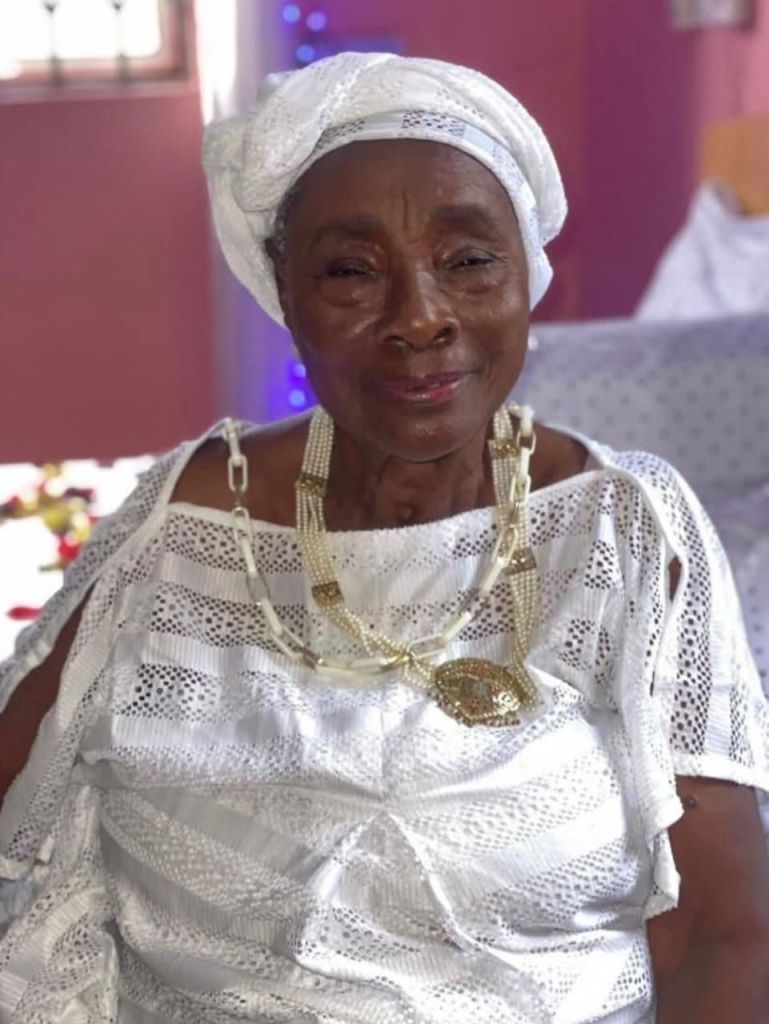
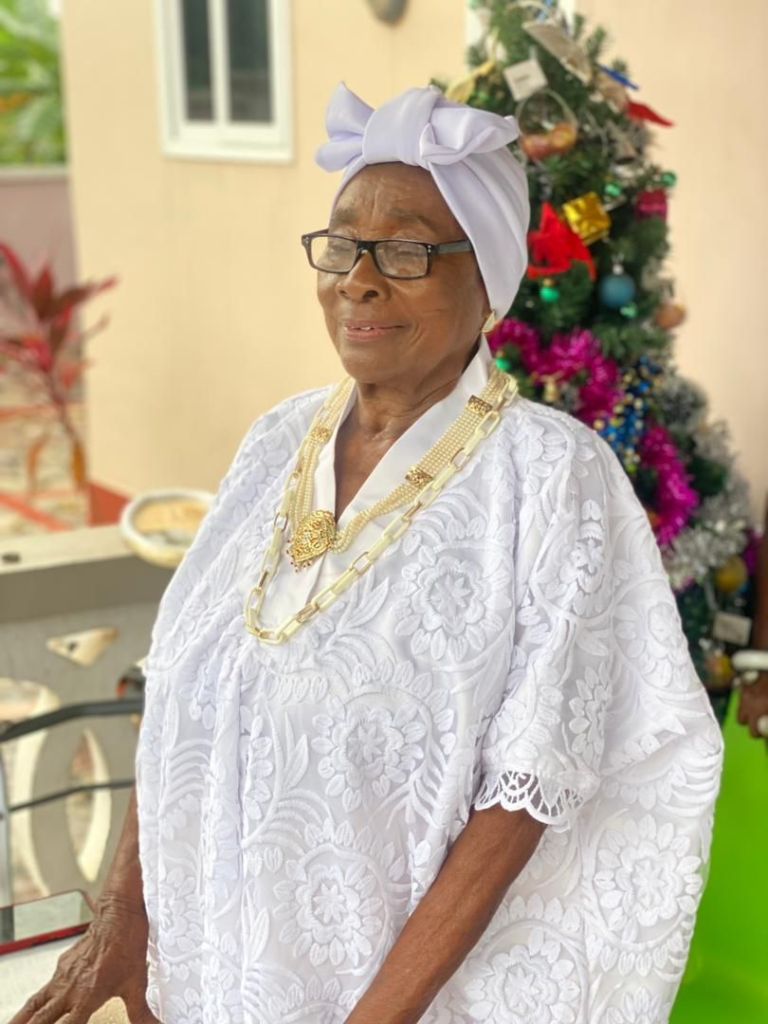
    My grandmother, my muse and my anchor, lived a beautiful rich 92 years until she was called to eternity . Now that she’s gone, every memory of her shines brighter, especially those tied to the simplest, yet most profound, acts of her love .

    One of such consistent acts revolved around my childhood and adult struggle with food.Growing up, I was an incredibly picky eater. It wasn’t just about the taste; the texture, the smell, and even the presentation of food could send shivers down my spine and turn me off completely.

    This pickiness often led to me being punished or scolded by my parents for refusing a meal. Sometimes, a mere scent was enough to make me physically ill. For instance, the smell of goat meat which is a known delicacy in West Africa being prepared would fill me with such nausea that I would sometimes throw up for days. As a result, whenever goat meat was on the menu, I was kept indoors or far away from the kitchen, a lonely exile from the family meal.

    My grandmother, who lived a couple of hours away, was keenly aware of my unique eating habits. She knew, with an understanding that transcended words, that I preferred my cornmeal , proteins, vegetables and my favourite palm nut soup prepared in very specific ways. She even knew precisely how I liked the small, fresh fishes used in our special “Ntitii” sauce to be cooked. It had to be the perfect mix of spiciness, freshness and taste. Her heart, ever so tender, worried constantly that I would go hungry or face my parents’ disciplinary hand.

    So, with a devotion that still brings tears to my eyes, she would often make the journey to bring me the food she knew I would eat. It wasn’t unusual for her to arrive early in the morning, a beacon of comfort, with special meals wrapped in local leaves or with some perfectly fried fish , 3tsew and accompanying soups. Her visits were a sanctuary, a quiet promise that I would be nourished, body and soul.

    One of the most vivid and cherished memories unfolded on a morning when I was in junior high school. The local cornmeal porridge had been prepared with milk, a combination I found utterly repulsive. As was often the case, I refused to eat, and after a few spankings from my father, I was told I’d go to school hungry. I remember the sting of tears mixed with the pangs of hunger as I sat in the car with cold stares from my sibilings to school that day.During the morning assembly, a former classmatein primary school but in a different class, Sabina Appiah , approached me. In her hands, she held a package of hot porridge and some puffy puff, a local pastry. My confusion quickly turned to apprehension; I had been taught never to accept food from strangers, especially with the unsettling wave of kidnappings around that time. I asked her why she was giving me this meal, which, ironically, was my preffered kind of porridge. Her answer left me speechless: “Your grandmother gave it to me for you.”I was stunned.

    My grandmother lived hours away, obviously had teaching to do at her local school that day and the roads were notoriously bad. So this was not possible…I thought! Sabina then recounted the extraordinary tale: She had been waiting for a car at the main transport yard in “circle” when a woman in a teacher’s uniform approached her. My grandmother, with her uncanny intuition, had recognized Sabina’s Achimota school uniform. She asked for Sabina’s name and class, and then, with a knowing glance, told her she was almost certain I hadn’t eaten breakfast. She entrusted Sabina with the food, a silent testament to her boundless concern.Still slightly disbelieving, I asked Sabina to describe the woman. Her description was unmistakably my grandmother. She even mentioned my grandmother saying she was from “Agona Kwanyako.” The pieces clicked into place. I took the food, ate it, and felt an overwhelming wave of relief wash over me.Yet, a lingering fear remained.

    AI-generated image.

    I thought it was a strange twist of fate, and I worried my parents would punish me for taking food from a stranger. I kept the incident a secret for two weeks, until my grandmother came to visit. The very first words out of her mouth when she arrived were, “Did you receive the breakfast I sent to you through your friend, Sabina?”Everyone in the house was surprised, having heard nothing of it. My grandmother then explained that she had been on her way to the Ministry of Education that morning when she spotted Sabina. A profound instinct told her I needed that meal. In her incredible generosity, she had even bought a meal for Sabina too!

    My grandmother’s love wasn’t just for grand gestures; it was a consistent, personalized devotion. She would often come by early in the morning to Accra just to drop off food items, condiments and special meals for me. She came early in order to make a return journey back to Agona Kwanyako that very morning to start teaching at 8:30am! Even as I grew older and visited her, she would prepare my favorite dishes exactly the way I liked them, going out of her way to ensure my comfort. This was one of the most intimate experiences I shared with her, a memory I hold closer than ever now that she’s gone. She was thoughtful, loving, and possessed an extraordinary ability to make me feel seen and cared for, even when I felt like the “weird” one, the odd one out.

    This is just the first of many stories I hope to share about my grandmother, about our unique relationship, and the countless memories I have of her. Her presence was a comforting constant, a personalized connection that went beyond the everyday interactions she had with her other grandchildren. Her love was a force, a quiet strength that shaped me. Her passing leaves a void, but the warmth of her love, especially those gestures stepped in faitb and godliness, continues to nourish my soul.

    Adwoa Okorewaa’s life teaches us the profound power of personalized love, unwavering resilience, and the lasting impact of thoughtful gestures. May her spirit inspire us to cultivate such empathy and consistent support in our own relationships, building trust and connection that truly endures.

                                ……………

    This story is a powerful testament to the impact of intentional, personal acts of love. What’s one memory of a loved one going the extra mile for you that you’ll always cherish? Share your story in the comments below! Let’s honor these quiet heroes who shape our lives.

                                  ……………..

    Your likes, comments, and shares truly motivate me to keep writing. If you enjoyed this story, please consider giving it a like! And if you’d like to read more, I’d love for you to subscribe to my blog

Is this your new site? Log in to activate admin features and dismiss this message
Log In