Over the last few weeks, I have found myself reflecting deeply on my work, the people I encounter, and how easily society misjudges value. In human resources(HR), I work with people every day. I help leaders make decisions, support employees, settle issues, and build trust. But nothing I’ve done professionally has shaped my understanding of people as powerfully as what I learned from my grandmother.
In today’s world, we celebrate the loud, the bold, and the charismatic. We assume the first person to speak is the smartest. We equate visibility with competence. But my life tells a different story. And the earliest chapter begins with my son… and with my grandmother.
My Grandmother: My Son’s Story
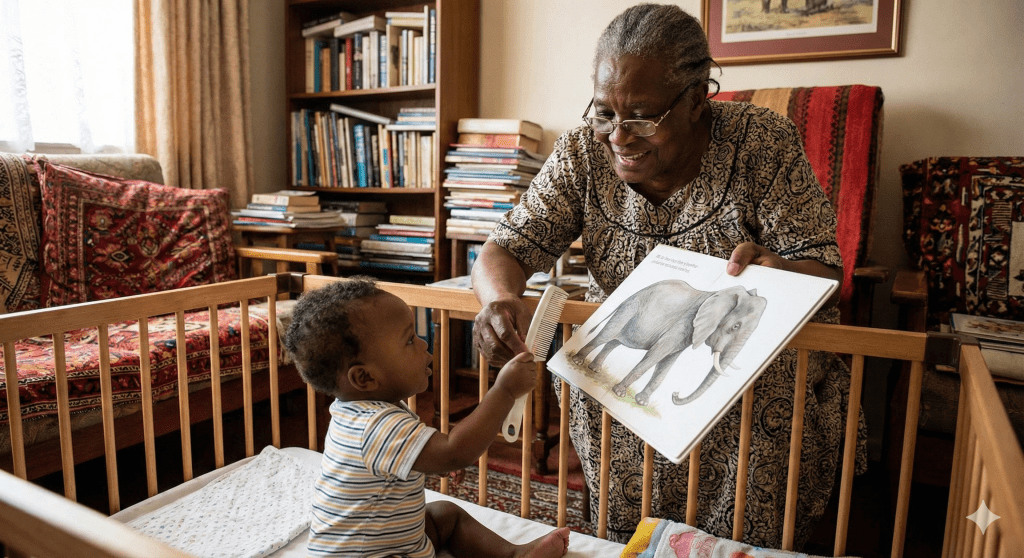
When my son was six months old, he started sleeping in my grandmother’s room. And she turned that room into a classroom. She read Shakespeare, history, even complex stories that made us wonder if she remembered he was a baby. Sometimes she taught him simple words like “comb,” or pointed to a picture and said, “This is an elephant. This is the trunk.”
We teased her often.
But she always replied with quiet conviction:
“Children see and hear everything. There is nothing wrong with teaching a child early.”
We shrugged. But she continued. And my son loved it.
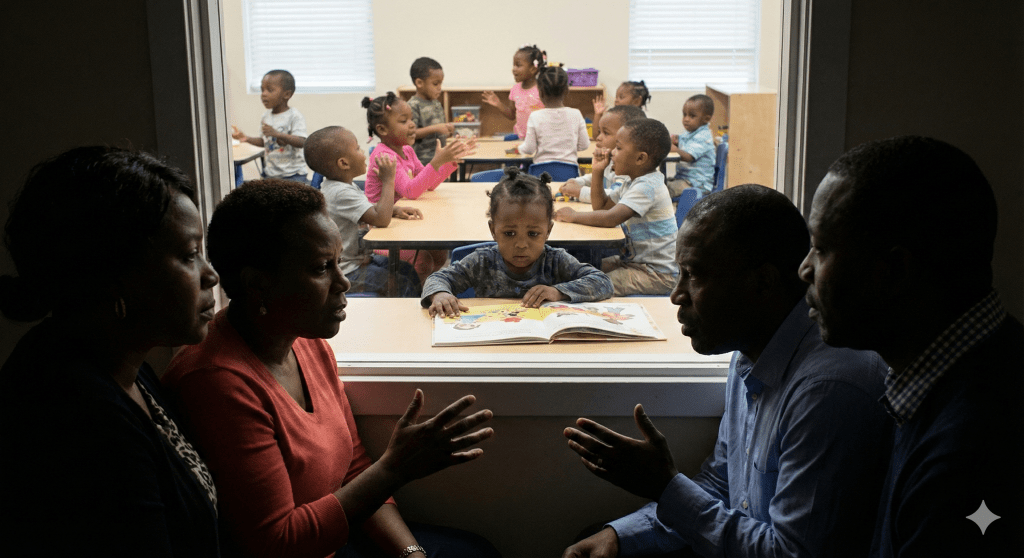
When he turned one, we enrolled him in an excellent school. After three weeks, I was called for an urgent meeting. The teacher and school administrator looked very concerned. They said my son was “too quiet” for a child his age. He did not make the playful sounds babies make. He did not join the noise of the class. He looked quietly at everything and did not verbally respond in the way they expected. They believed he had a speech or developmental delay.
They referred us to a speech therapist and a developmental specialist.
I left in tears.
At home, I shared everything with my grandmother. She looked at me with a mixture of disbelief and annoyance. She said there was nothing wrong with her great-grandchild. She insisted that he spoke all the time. According to her, he talked, reacted, and even repeated things she taught him. I had not seen any of this because he did not do it with anyone else. Or perhaps, we didn’t do them with him.
The Moment Everything Became Clear
My grandmother asked to accompany me to pick him up one day. She carried her usual small bag with a book inside. When we arrived at the school, the teacher came out with my son. As soon as he saw my grandmother, he ran straight to her. She took out her book and he quietly leaned close to her, fully engaged.
When the teacher approached and repeated her concerns about his speech, my grandmother interrupted gently and asked her if she truly believed he had a speech problem. The teacher said yes. My grandmother said calmly:
“Move him slightly away from the noise on Monday and give him paper. Ask him to write two-letter and three-letter words. Show him words and let him pronounce them. You will see he does not have a speech problem.”
The teacher was skeptical.
But a week later, she called in pure amazement. She said my son could talk. He formed sentences. He wrote two-letter and three-letter words and pronounced them clearly. She said he was observant, attentive, and simply uninterested in the noise they were using to stimulate sound-making. He was engaged when the activity matched how he learned. She said, “He actually talks. He’s not delayed. He is different.”
From that day forward, the school adjusted how they taught him. They created a new learning path for him. And he blossomed.
That day, my grandmother taught all of us something priceless:
Silence is not a deficiency. Different is not wrong. Not every child speaks the language of noise.
My grandmother saw what the world missed. She always did.
Different is not less. Quiet is not a flaw.

Years later, when I started working with a large international organization, I met a group of interns and young national service personnel. In every group, there are always the ones who shine loudly. They talk a lot. They present themselves confidently. They are visible.
And as expected, people naturally paid the most attention to them.
But there was another young lady who was different. She was quiet. She almost never spoke during team meetings. She avoided the spotlight. Many people overlooked her. But because of what I had learned from my son and my grandmother, I noticed her.
I made a deliberate decision to get closer to her.
During lunch, I chose to sit near her. I tried to understand who she was. And slowly, she opened up. I discovered that the quiet young woman was extraordinary. Inside this gentle, quiet person was depth, creativity, and insight that meetings had never revealed. She simply was not the type to speak loudly in a room full of people. She needed space and trust.
For most of her internship, nobody saw this.
Then one day, another intern who usually assisted a senior manager was unavailable. Out of necessity, the manager assigned a task to this quiet intern. It was a simple assignment with minimal instruction. Just a few lines on what he needed.
Within a few days, the manager came to me in complete awe. He told me she had produced work far beyond what he expected. She had developed a full proposal with fresh ideas and creative solutions. It was detailed, clear, practical, and innovative. He could not understand how someone so quiet had such brilliance hidden inside her. And why no one noticed.
He said he wanted to keep her for a position he was creating.
But she declined. She said it should not have taken a whole year for anyone to see her worth. She wanted to pursue other skills, thrive in an inclusive environment, and moved on.
We lost a rare talent because nobody had looked past the surface, and we did not see her soon enough.
She earned an important international scholarship soon after and today, she works for a global firm. She is thriving. We still talk. And every time her name comes up, I remember how humbling the experience was to the managers who overlooked her.
Seeing What Others Often Miss.

This week, I encountered a situation where an excellent employee was being unseen and relegated to the background simply because he was not loud. He never came up in discussions. His potential remained untapped, and I couldn’t help bringing this up with the head of the unit. I met another young female entry level employee who assumed I did not see her or know her work. I actually chided myself, because with all the chaos that has enveloped the development sector over the past ten months, I have been so overwhelmed that I never had proper conversations with her whenever I walked into her office. What she didn’t know was that her skills, talent, and quality of her work had come up several times in my conversations with senior managers in her programme and even some outside.
We had a quick one-minute conversation this week, and she reminded me of that earlier incident from years ago. if you are reading this, “M” I see you! And happy we had a chat.
In our world today, people are tagged too quickly. We equate loudness with intelligence. We assume visibility equals value. We label children and employees simply because they do not fit the expected rhythm. But some of the brightest minds sit in silence. Some of the strongest talents speak softly. Some of the most creative souls do not perform for the world.
To the Quiet Ones: Lessons from My Grandmother
Your likes, comments, and shares truly motivate me to keep writing. If you enjoyed this story, please give it a like and share ! And if you’d like to read more, I’d love for you to subscribe to my blog
For those who are quiet, observant, introverted, or simply not competing with the noise around you, hear this:You are not less. You are not invisible. You are valuable.
And to leaders, teachers, parents, and managers:
If you are not seeing the quiet ones, you are missing brilliance and missing diversity in its truest form.
Inclusion is not only about who speaks the loudest, but who is given space to be fully themselves.
One of my earliest lessons in diversity and inclusion came from a quiet grandmother, a quiet child, and a quiet intern. They taught me that powerful voices do not always rise above the noise. Sometimes they wait to be invited, noticed, and valued.
Their wisdom shaped my core values:
patience, discernment, respect for difference, the courage to see people deeply, the wisdom to look beyond noise, and compassion for the overlooked.
These guide my work and my life.
They remind me that true inclusion means recognising that worth is not always loud and brilliance does not always announce itself.
……………………………………………………………..
If you’re reading this, take a moment to look beyond the noise.
The quiet ones who don’t seek the spotlight often hold remarkable talent, insight, and creativity. It’s our responsibility as leaders, teachers, parents, and colleagues to notice them, give them space, and let their brilliance shine.
Think of those around you who may be overlooked. Are you truly seeing their potential?
Choose today to listen, observe, and recognize what others often miss.
Brilliance doesn’t always shout, but it always matters.


 Adwoa Okorewaa : Wellspring of A Matriach
Leave a comment